Colour Gestures and Human Faces
Abstract painting and portrait photography from the László Zimányi Collection
Gábor Ébli
In recent years, Tér-Kép Gallery, sustained by the municipality of the Buda Castle District, has made a practice of presenting private collections. This way, alongside the artworks, also the motivations behind their selection and the collectors’ personal relationships to them become visible.
Lenke Szilágyi: János Szirtes ╱ 1989 ╱ gelatine silver print ╱ 48.5×48.5 cm
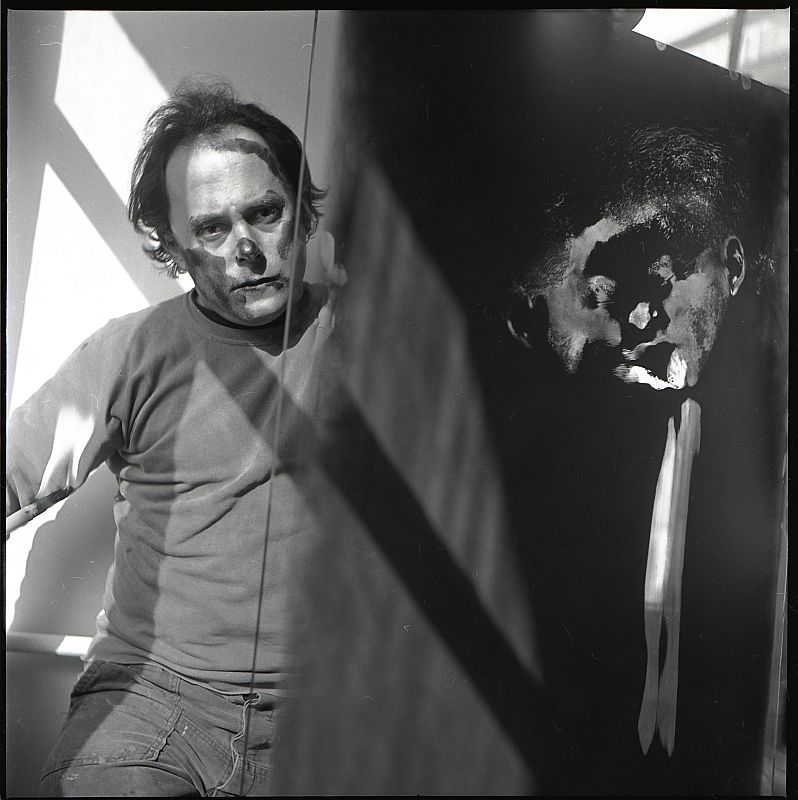
Lenke Szilágyi: János Szirtes ╱ 1989 ╱ gelatine silver print ╱ 48.5×48.5 cm
Icon image: Kálmán Pollacsek: Scythe Trace ╱ 1987 ╱ oil on canvas ╱ 170×129.5 cm
Cover image: Tibor Nádor: Standing Image ╱ Moving Light (Forest Friends – István Nagy) ╱ 2024 ╱ oil, oil stick
From the collection of Gábor Kozák and Sára Stomp, uncompromising artistic self-representations were shown under the title Hellraisers. This was followed by a joint exhibition drawing on four collections, and featuring works delegated by the collectors in response to curatorial questions, titled Colligere (Latin: to collect). In the summer of 2025, yet another perspective came into focus: thirty-five years earlier, artist János Szirtes had purchased a studio apartment in the Castle District, not far from where Tér-Kép Gallery is situated today, and the exhibition Painting for pleasure looked back at his early period through works borrowed from private collections, mapping its reception history through interviews with the artist and the collectors.
The current project presents different segments of an extensive private collection to the public across various locations in Buda. László Zimányi (b. 1950) trained as a chemist and worked at the Százhalombatta oil refinery; he still lives with his family in the southwestern agglomeration of the capital. In 1989, he founded a private company which, by the turn of the millennium, had become a key player in the domestic wholesale market for hunting apparel. This success made it possible for him to realise a childhood ambition: while collecting museum postcards and reproductions in his youth, decades later he became a collector of Hungarian art from the second half of the twentieth century to the present day.
At the core of the collection lies organic abstraction from the 1950s onward. The exhibition at Tér-Kép Gallery presents individual positions from this field, highlighting the diversity of this artistic language. The selection spans more than half a century, from artists now considered canonical – such as Dezső Korniss (1908–1984) who produced drip paintings only during a six-year period of his career, between 1956 and 1962 – to contemporaries like Márta Kucsora (1979), also known as a co-founder of the artist-run studio and exhibition space, Budapest Art Factory operating today in another district of Buda, or Tibor Nádor (1967), who is likewise active as the artistic director of Artus Studio, located in yet another former industrial building in the vicinity.
István Tóth: János Balázs’ show ╱ 1973 ╱ gelatine silver print ╱ 48,7×59 cm
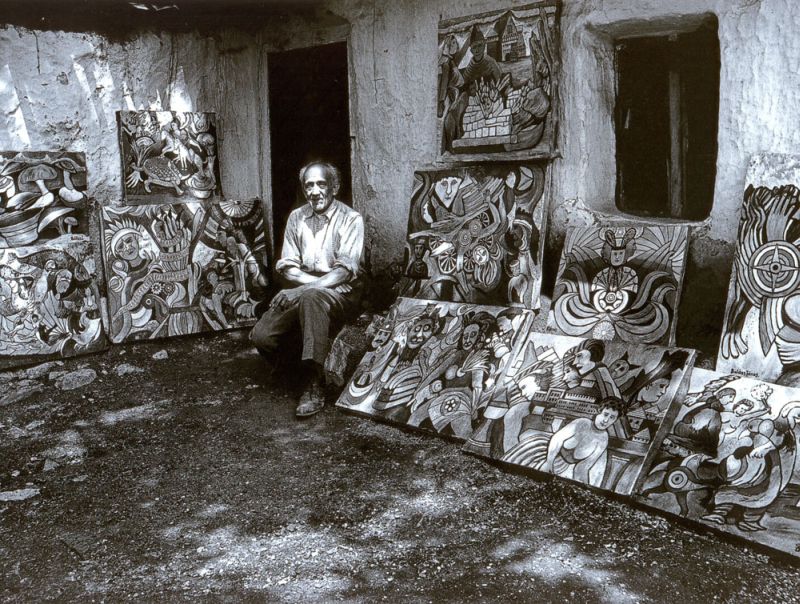
István Tóth: János Balázs’ show ╱ 1973 ╱ gelatine silver print ╱ 48,7×59 cm
Kálmán Kecskeméti: El Kazovszkij ╱ 1968 ╱ photo ╱ 35,1×26 cm
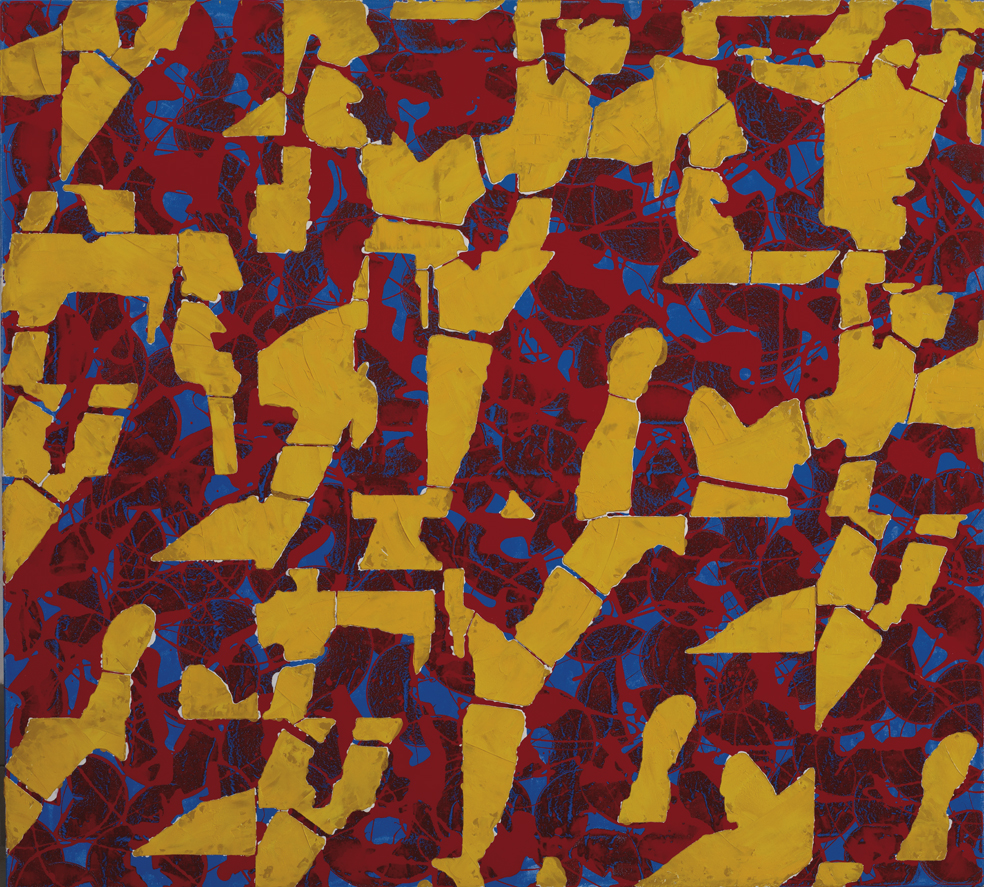
László Mulasics: Viscum Album IV. ╱ 2000 ╱ oil and enamel on canvas ╱ 100×110 cm
Endre Hortobágyi (1941–1998) and István Nádler (1938) were both once members of the Zugló Circle, an informal gathering of like-minded artists, initiated by painter Sándor Molnár in 1958; from each of them, a large-scale painting is on view – one relying on the power of a single colour, the other on the full spectrum of colours.
Ilona Keserü (1933) combines freely soaring sequences of organic motifs with a wide-ranging chromatic geometric grid, while Zoltán Tölg-Molnár (1944–2024), who rarely appears as a gestural painter, works with great economy, building his composition on a single sequence of movements and the contrast between dark and light.
Kálmán Pollacsek (1959) emerged as an up-and-coming artist around the time of the political transition; his large-scale painting draws its dynamism from nature, from the sweeping motion of mowing, suggesting a faith in the transformation of both artistic and public life. Created a quarter of a century later, at the turn of the millennium, László Mulasics’s (1954–2001) painting derives its pulsation from the superimposition of multiple networks of colours and motifs.
Abstract painting and the assertion of colour’s autonomous role were also decisive in various periods of the twentieth century among Hungarian artists who chose France as their home. The influence of Henri Matisse, followed by Fauvism and later the École de Paris, directed many Franco-Hungarian artists toward a colourist approach. This was complemented by the recognition of the power of painterly gesture. The art of Simon Hantai, Judit Reigl, Endre Rozsda, and other Hungarian artists working in France forms a distinct unit within the collection; a dedicated exhibition drawn from this material will open soon.
István Tóth: Dezső Korniss ╱ 1977 ╱ gelatine silver print ╱ 58×45 cm
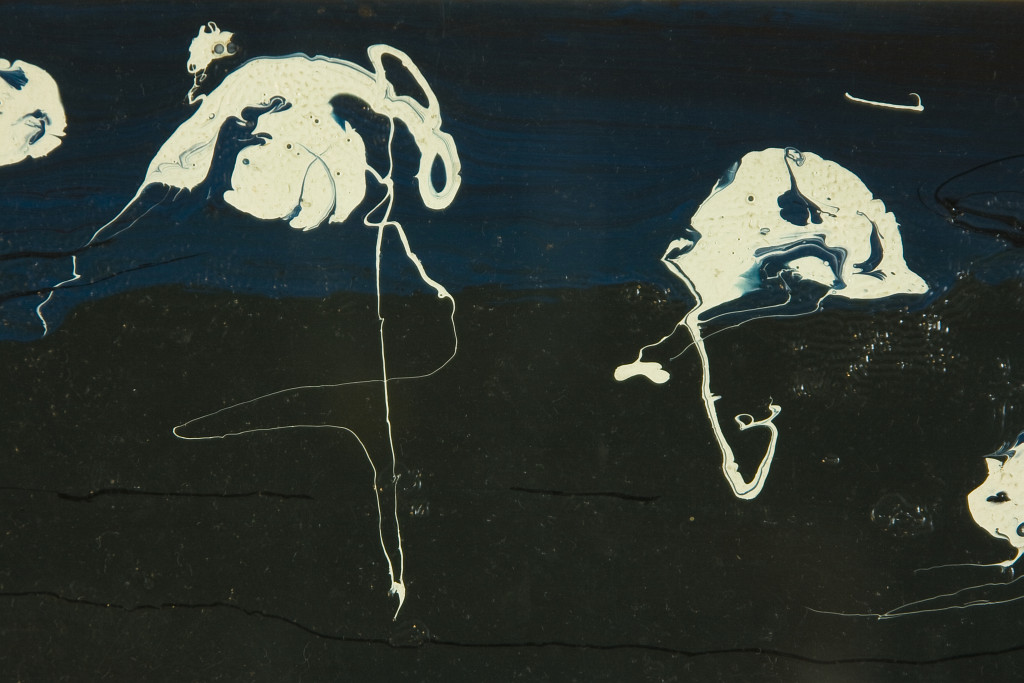
Dezső Korniss: Surreal Dream, n. d. ╱ oil on cardboard ╱ 11×19.3 cm
Zsuzsa Berényi: Miklós Erdély – Table actions ╱ 1982–2009 ╱ photo ╱ 16.1×23.3 cm
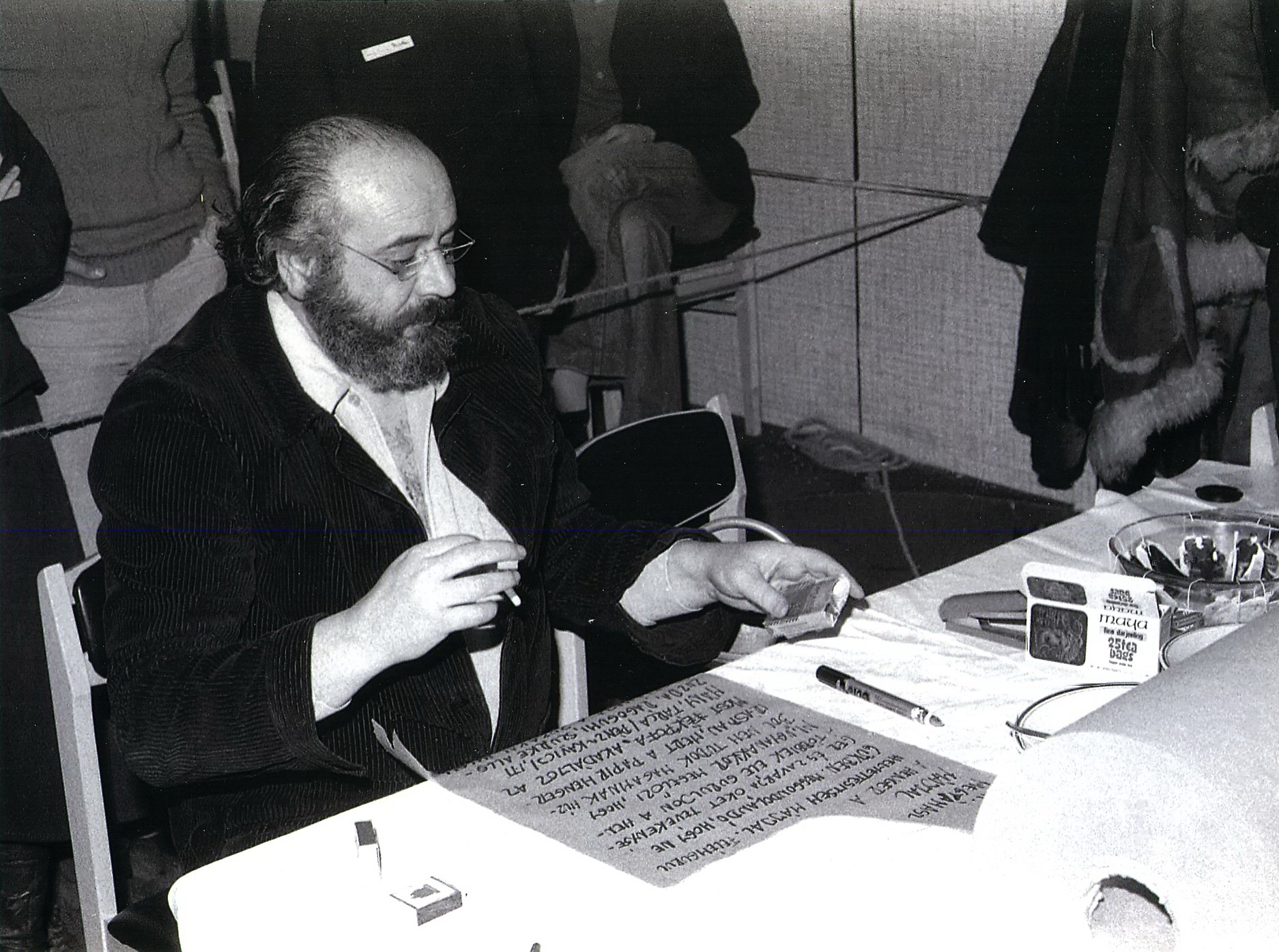
Zsuzsa Berényi: Miklós Erdély – Table actions ╱ 1982–2009 ╱ photo ╱ 16.1×23.3 cm
Alongside painting, László Zimányi’s collection also encompasses other genres. Its photographic holdings include a broad selection of portraits of artists. The recently renovated Kolorit Gallery, located next to Tér-Kép Gallery, presents an exhibition from this material. From Dávid Biró (1992) through Lenke Szilágyi (1959) to István Tóth (1923–2016), the photographs on view were taken by artists who, as friends of the visual artists they portrayed, captured their peers from close proximity, in relaxed and sincere situations.
The photographs feature defining figures of 20th and 21st century Hungarian art, from Margit Anna through Béla Czóbel to Imre Bukta. Young El Kazovszkij dreams in front of Kálmán Kecskeméti’s (1942) camera while István efZámbó makes no effort to conceal his rebellious spirit in Gyula Kincses’ (1952) shot. Photographer and subject meet as equals.
In fact, sometimes they are identical: from Gyula Gulyás to Miklós Erdély, several artists feature in the photo collection with photos taken of them alongside with photos taken by them (often of themselves).
Yet another segment of the collection is connected to the sculptor Erzsébet Schaár (1905–1975). From early terra cottas to the small-scale sculptural model for the Máré Legend, an outstanding selection is presented in Budafok, where Schaár was born and worked, at the contemporary exhibition space of the 22nd district municipality. This exhibition, too, is accompanied by exceptional photographic material, including portrait and interior photographs by Demeter Balla (1931–2017), Tamás Féner (1938) and others.
With also its graphic section extending from Lajos Vajda to Péter Türk, the current exhibition series of the Zimányi Collection offering one show each devoted to painting, photography and sculpture, stands for the equality of genres.
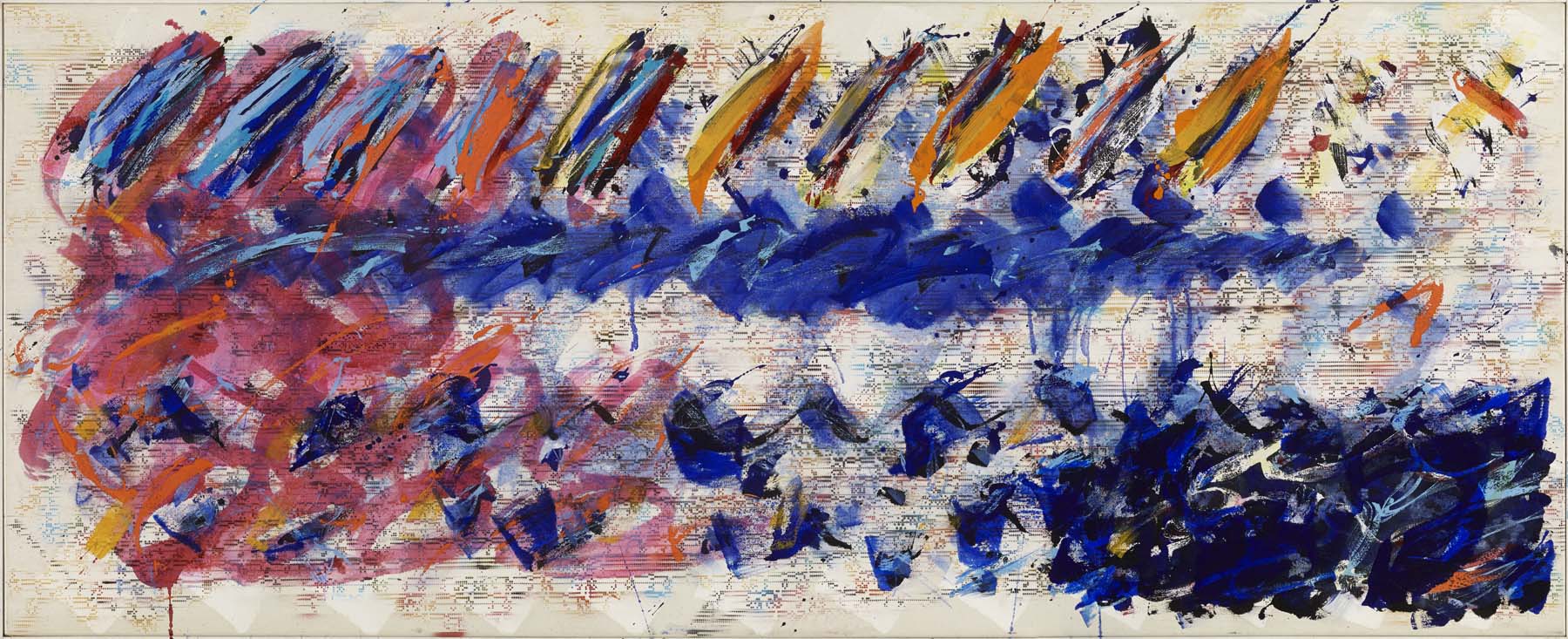
István Nádler: Dots Space ╱ 1982 ╱ oil on canvas ╱ 80×200 cm