From a knowledgeable investor to a proactive agent: art collector Péter Kacsuk
Gábor Ébli
What does a scientific researcher do when his professional career, thanks to international grants, allows him to build up financial savings? He visits a private banking office, where, in an auction catalogue that comes to hand, he recognises both the artistic and financial value of the works. In December 2011, he purchases his first classic modern artwork. However, what is a large sum for him is only enough for modest works in this market. After three years of further purchases, he begins to feel the desire to acquire significant works. To get better value for money, he switches to contemporary art.
Ágnes Eperjesi: Pathos and Critique ╱ 2019 ╱ 3D printing, iron stand ╱ 180 x 40 x 40 cm
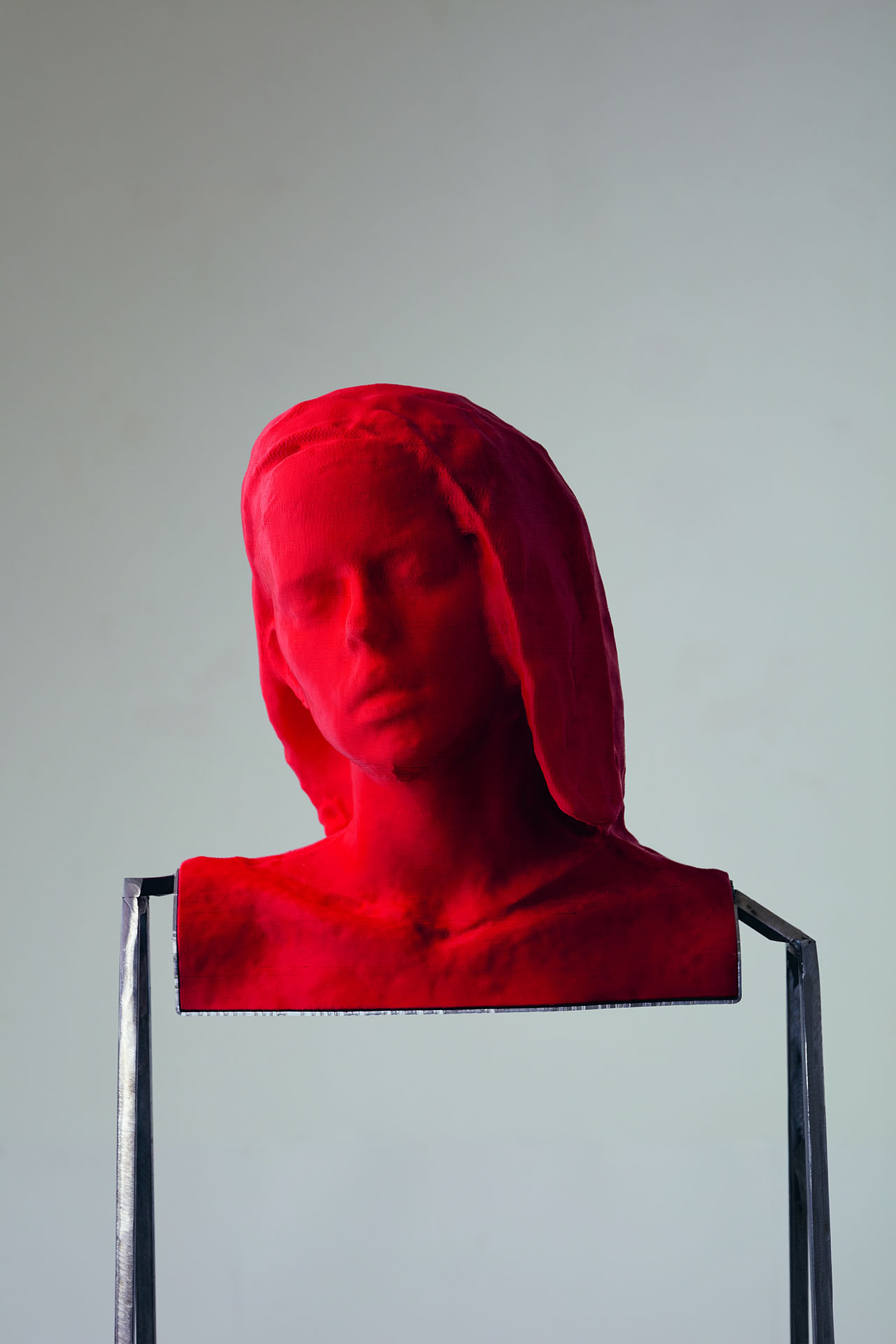
Ágnes Eperjesi: Pathos and Critique ╱ 2019 ╱ 3D printing, iron stand ╱ 180 x 40 x 40 cm
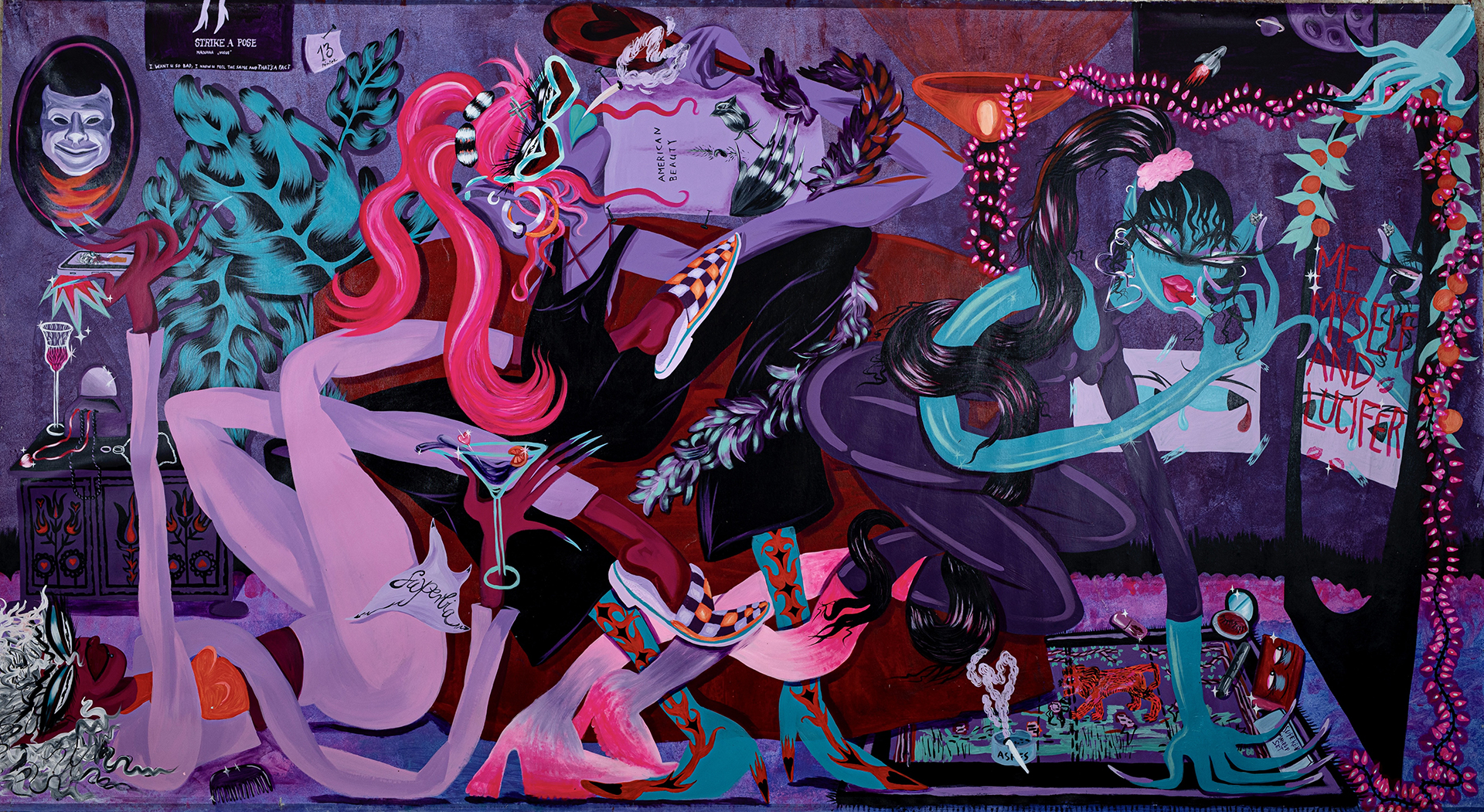
Orsolya Nyíri: SUPERBIA (Pride) ╱ 2022 ╱ acrylic on canvas ╱ 200 x 400 cm
Icon picture: Viola Boros: Success Women ╱ 2015 ╱ acrylic, textile, canvas ╱ 340 × 200 cm
Cover picture: Peter Ujházi: Carpet ╱ 2012 ╱ acrylic, paper ╱ 215 x 401 cm
By visiting galleries and getting to know artists, he develops a taste for it. Then in his sixties, he had had his fill of professional success, and, being a sociable person, he immersed himself in this new milieu with pleasure. Intellectually, exploring contemporary art came at the perfect time for him, just as, on a personal level, this world brought dynamic new relationships.
He transforms from an investor into a discerning art collector by realising that this is not merely a matter of taste but also requires knowledge of the art world. Having acquired new knowledge throughout their life, it comes naturally to him to learn about this world too. So he enrols on a course at the Contemporary Art Collectors’ Academy, reads systematically, and maps out the key figures and institutions.
Meanwhile, his home has filled up with artworks. Should he carry on? The question doesn’t even arise; by this point, he is already in the grip of his passion. However, if he stops buying pieces just to hang on the wall from now on, he can select works more freely, guided by professional criteria. He begins to acquire large-scale works, and in contemporary art, scale often matters. This also broadens the scope of the genre, with the first groups of objects and works that can be arranged as installations beginning to appear at this time in the collection.
Whilst these are not easy to live with, they will be suitable for exhibition. The public’s perspective comes into play. The aim of acquiring art is not (merely) personal pleasure, but a sense of responsibility within the art scene to ensure that powerful works do not remain trapped in the studio but find a discerning owner from whom institutions will later request loans. What began as an investment evolved into conscious purchasing and then collecting.
Ágnes Verebics: Eye-virus masks ╱ 2019 ╱ foil print, mixed media ╱ 20 x 20 cm
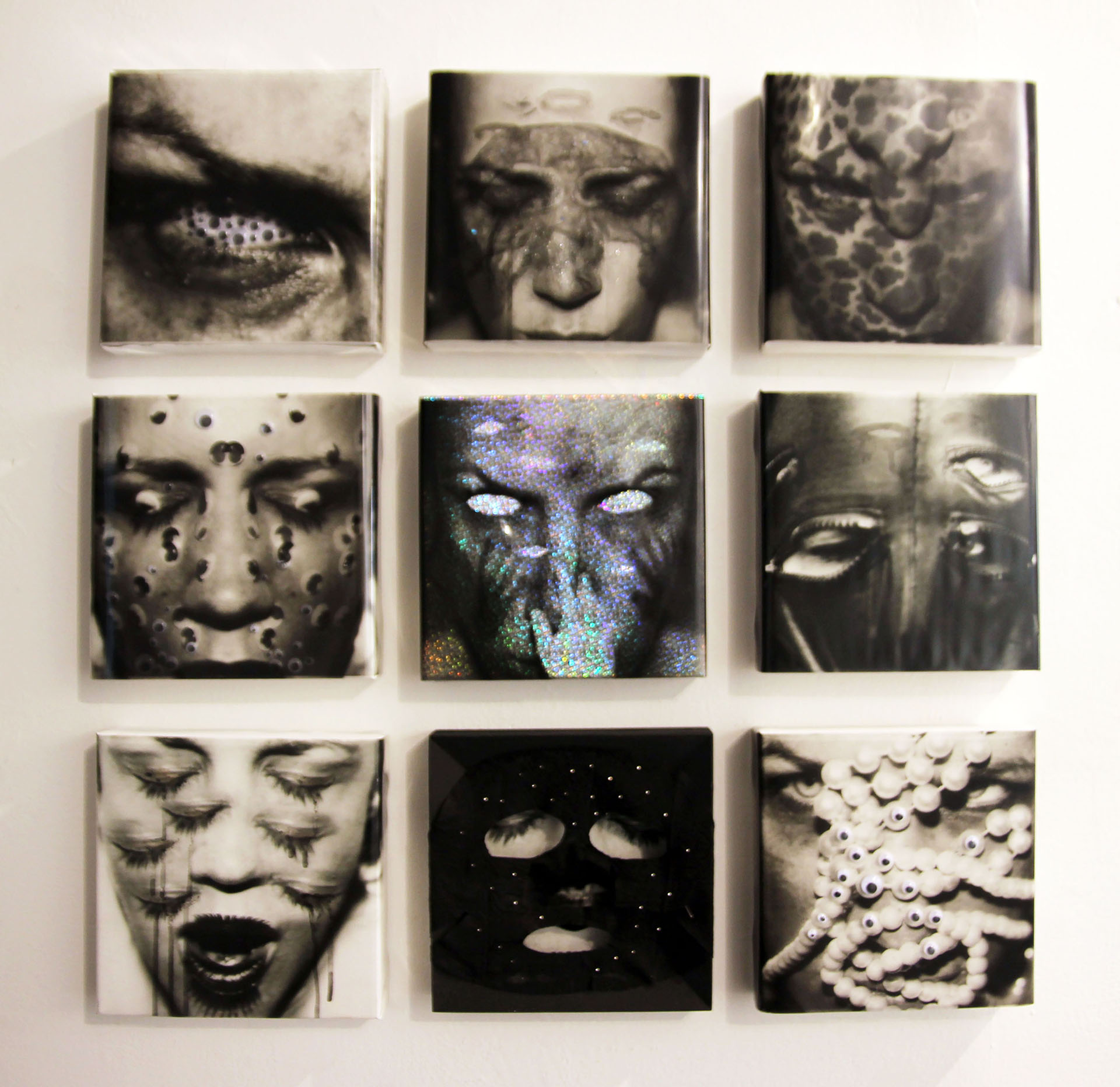
Ágnes Verebics: Eye-virus masks ╱ 2019 ╱ foil print, mixed media ╱ 20 x 20 cm
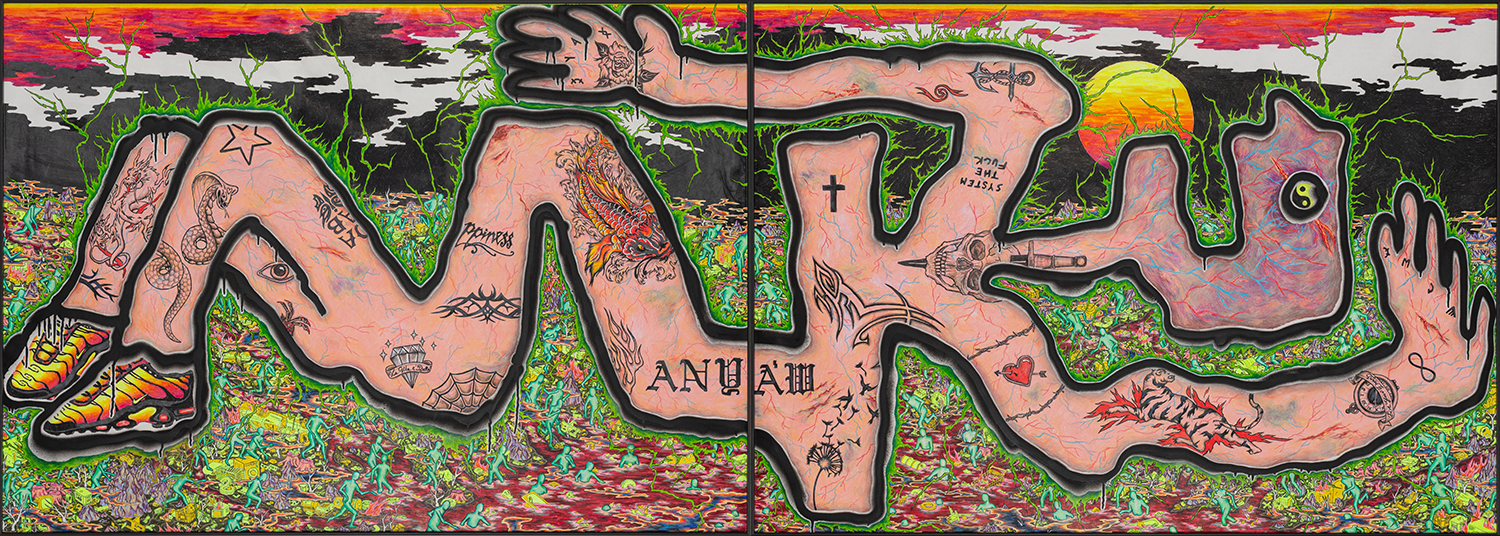
Ráhel Monory: NUKU ╱ 2019 ╱ colored pencil, acrylic marker, spray paint, paper ╱ 100 x 280 cm
In 2019, the commission came through. The Art Mill in Szentendre is reconstructing the art of the 1990s from private collections, and the two curators are also lending works from the collection. The names of the thirty-three collectors are widely publicised, and what’s more, one of the most frequently reproduced works comes from this very collection. After eight years of acquiring works, Péter Kacsuk became a recognised figure within the Hungarian collectors’ network. And has since grown in prominence.
The themes of the works played a decisive role in this. Not only did their size increase, but when they were not displayed on the walls of a home, their message became provocative. The collection’s defining cornerstones, which remain prominent to this day, began to take shape: works reflecting on public life, and exploring the social position of women and female artists.
As the context in which these works were created is often essential to their interpretation, Kacsuk also collects documentation relating to them. The intellectual emerges from this, as does the researcher. He knows that for future art historians, not only the works in his possession but also their background and reception history will be relevant. He no longer collects (just) artworks, but projects. Pál Sándor Tóth manages the collection’s artworks and data using software he developed himself whilst the collector receives professional support from his eldest son, who holds a PhD in the sociology of art from Japan, and consults with him before making acquisitions.
Péter Kacsuk began to wonder how he might extend this involvement to others. Why not join forces with like-minded collectors? Following the exhibition in Szentendre, in 2020 he and seven other collectors founded the Art Collectors’ Club. Since then, they have held an annual joint exhibition in Budapest, and in 2026 one at the Liszt Institute in London.
Given such active networking, it was only a matter of time before a solo exhibition of the collection came to fruition. But perhaps no one imagined that this would give rise to an entire series. In 2022, as the 19th instalment in its series showcasing contemporary collections, the Godot Gallery presented a selection from the collection for the first time. A year later, the collector – who holds a DSc from the Hungarian Academy of Sciences and has been a university professor since 1999 – organised an exhibition at his workplace, the well-known scientific centre, the SzTAKI office.
László Felugossy: Clothing Images – Auto-transfer ╱ 1991 ╱ mixed media, textile ╱ 180 x 390 cm
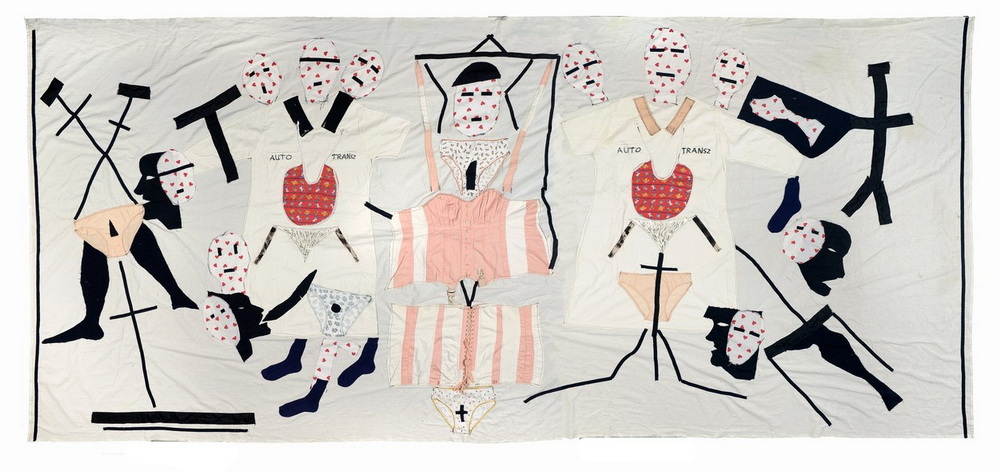
László Felugossy: Clothing Images – Auto-transfer ╱ 1991 ╱ mixed media, textile ╱ 180 x 390 cm
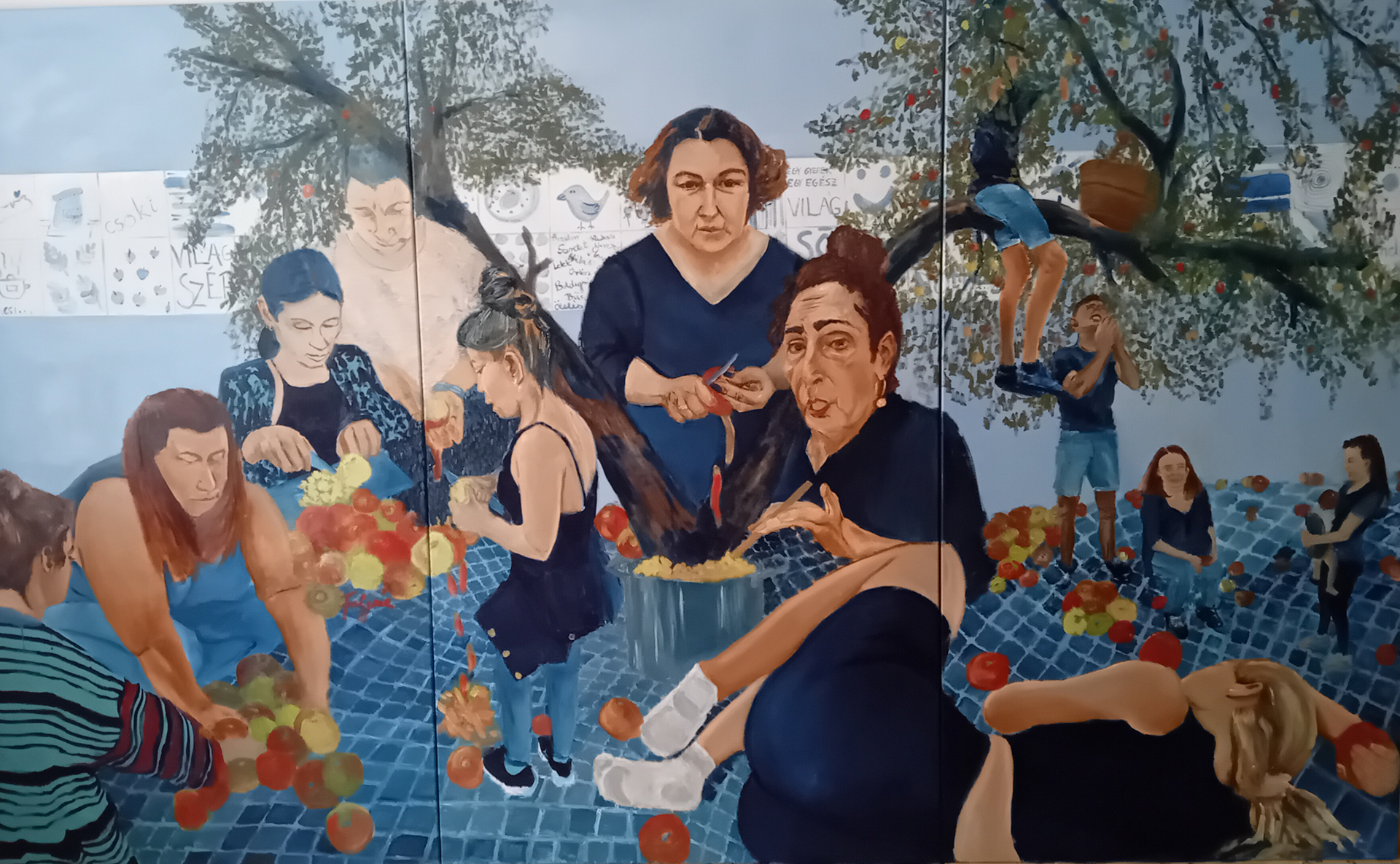
Andrea Fajgerné Dudás: Beauties of the World Play Common Jam ╱ 2023 ╱ triptych, oil on canvas ╱ 170 x 280 cm
In the autumn of 2023, he organised the next exhibition at the 1111 Project Gallery. This time Péter Kacsuk exhibited one emblematic work by each of four artists – Eszter Metzing, Sára Richter, Szilvia Terdik and Gabriella Tétényi – and arranged for each artist to speak about their work on the opening night. A defining moment was the introduction of a new genre: the ‘exhibition + event’. The collector creates not only an exhibition but also an opportunity for experimental artists to express themselves, providing a context in which their work can be interpreted. He is no longer merely a collector, but almost a producer – an active agent within the scene. This model was preceded by two experiments: in 2019 at Kriszta Nagy’s exhibition in Budapest, and in 2020 at drMáriás’s exhibition in Szekszárd, where much of the material on display came from this collection, and Péter Kacsuk played a key role in the realisation of both exhibitions.
The Miskolc Gallery recognised this complex role when, in 2023, it organised a comprehensive exhibition of the collection, for which a catalogue was published with co-funding from Péter Kacsuk. Curator Brigitta Muladi grouped the works around four themes: critical reflections on Hungarian public life (for example, works by Levente Baranyai and Ábel Péterfy); issues of women and art (Andrea Fajgerné Dudás, Viola Boros); works exploring self-awareness (Ágnes Verebics, Judit Gallai); and the relationship between classical and contemporary art (Naomi Devil, as well as a collaborative work by Dániel Labrosse and Patrick Murakami).
The exhibition in Miskolc showcased the collector’s long-standing interest, dating back to his earliest acquisitions, in grotesque depictions of (Tamás Galambos, László Ősi). This can be drawn into parallel with the very latest works, such as the first Hungarian NFT (Péter Weiler, 2021), which is in this collection. The exhibition’s centre piece, a work also featured on the catalogue cover, is Imre Bukta’s meticulously crafted, handmade object, Satan in the Library, one of the mysteries of which is what or whom the figure of the Devil – huddled together from organic materials – actually embodies
The issue of women has become so central to contemporary discourse that, under the title Woman XXI, the Vaszary Gallery in Kaposvár presented works from the collection reflecting contemporary changes in women’s roles in a special exhibition accompanied by a catalogue at the end of 2023. This brought the total number of exhibitions featuring works solely from the collection to no fewer than four in 2023.
The presentation continued in Debrecen. MODEM, which opened in 2006, has recently shifted its focus from being an exhibition venue to taking on the role of a museum. It has opened a permanent exhibition featuring its own acquisitions from the past twenty years, supplemented by works on loan from private collections, and for this purpose has borrowed five significant works, including one large-scale piece each by Emese Benczúr and the Société Realiste duo from Péter Kacsuk’s collection. Although the collector is only seventy-three years old, he is already thinking about the future of his collection and, true to his approach to date, is seeking solutions that strengthen the public discourse on art, rather than pursuing private interests.
Milorad Stajčić: Sensitive C1 ╱ 2024 ╱ PET-G ╱ 90 x 80 x 45 cm
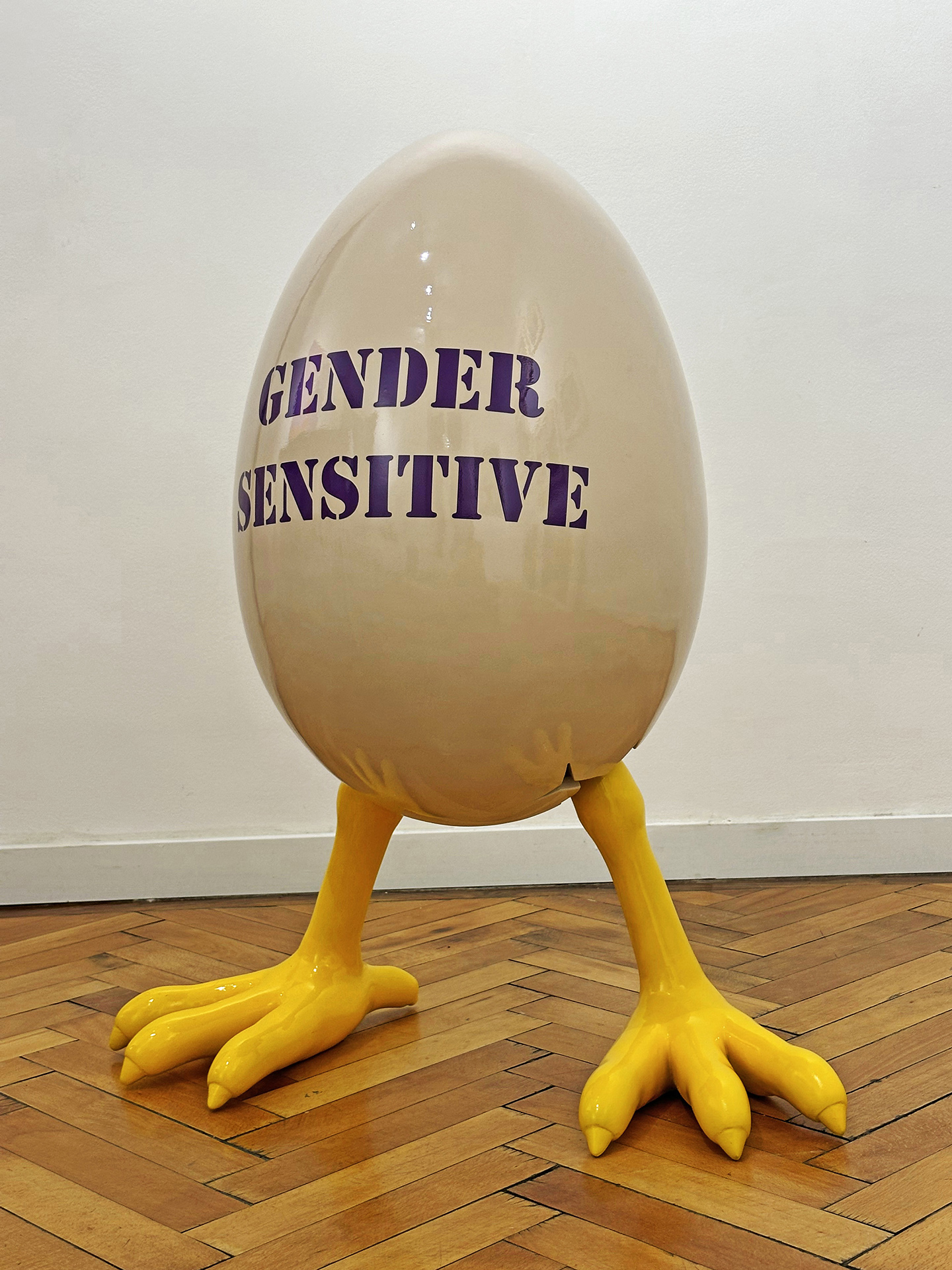
Milorad Stajčić: Sensitive C1 ╱ 2024 ╱ PET-G ╱ 90 x 80 x 45 cm
Tamás Galambos: Gold Fever ╱ 1996 ╱ oil on canvas ╱ 130 x 100 cm
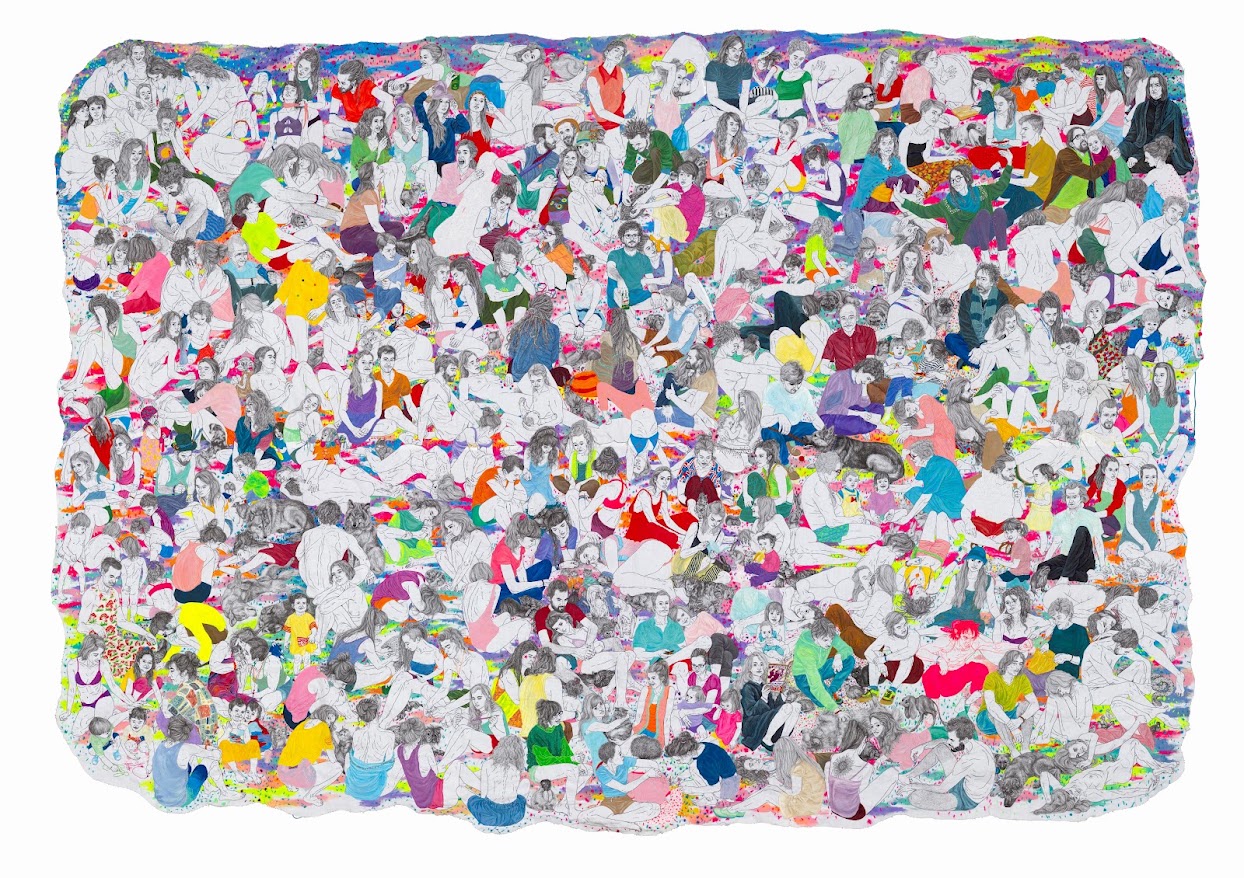
Eszter Metzing: Inner Garden ╱ 2018 ╱ acrylic, watercolor, fabric paint, pen, embroidery, canvas ╱ 210 x 310 cm
These ambitions have also caught the attention of specialist journals. The 2021/1 issue of Fotóművészet published an essay on the collection’s new media works (Péter Szalay, Marko Rodics, Péter Tamás Halász). In 2022, Art is Business published an online article, followed by a detailed print interview in issue 4/2023 of Art Magazin with the collector about the collection, which ranges from Domonkos Benyovszky-Szűcs to Ágnes Eperjesi and Péter Ujházi.
A recurring theme in both the exhibitions and the articles is the exploration of the diversity of contemporary art, the promotion of young artists (Annamária Gáspár), new genres (Gyula Várnai) and collaborative creative practices (Eszter Ágnes Szabó), as well as the latest chapter in the collection: its international expansion. First came a large-scale installation by the Spanish artist Carlos Aires from the 2023 Art and Antik fair, followed by further works by international artists, e. g. Milorad Stajčić, Kristina Pirković and Selma Selman that have since found their way into Péter Kacsuk’s collection.
Over the course of a good decade and a half – having first come across the auction catalogue in a private banking office in 2009, two years before his first auction purchase – the collection has now traversed almost every stage of its development. It has progressed from the classical to the contemporary, from painting to a diversity of genres, and from narrative representation to a conceptual, discursive understanding of art, whilst also embarking on international expansion and institutional collaboration. The owner does not gloss over any of this in retrospect but openly acknowledges its history of development in every publication.
In 2024, the Deák17 Gallery – run by the capital and renowned for its outreach programmes – presented a further selection from the collection, focusing on large-scale works. The spacious wall surfaces provided a distinct setting for each artist, showcasing El Kazovszkij’s exploration of identity through personal mythology, Ráhel Monory’s painterly expression of feminine themes, Máté Orr’s depiction of a surreal dream world, or even the now almost classic work of Péter Földi, with his animal symbols rich in human allusions. As it was a hundred years ago that the Surrealist Manifesto was published, the focus fell on the dreamlike works in the collection (István efZámbó, László feLugossy, Orsolya Nyíri).
In 2025, further solo exhibitions of the collection took place at the Corvin Cultural Centre and subsequently at the Apollo Gallery, whilst the main highlight of 2026 is going to be the publication of a book about the collection.
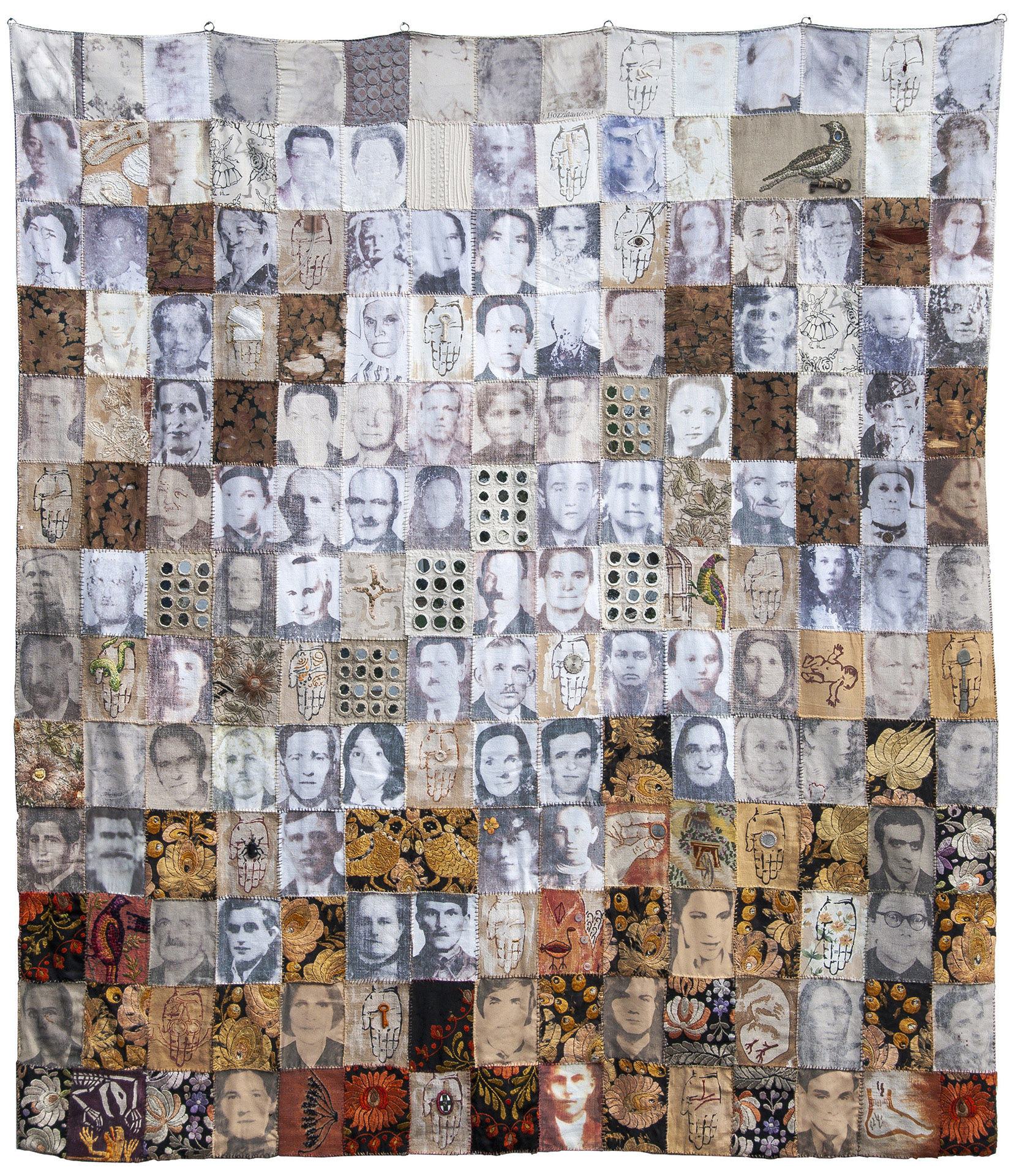
Sára Richter: Hundred Faces ╱ 2010–2022 ╱ textile, photographs, mirrors, embroidery ╱ 166 x 148 cm
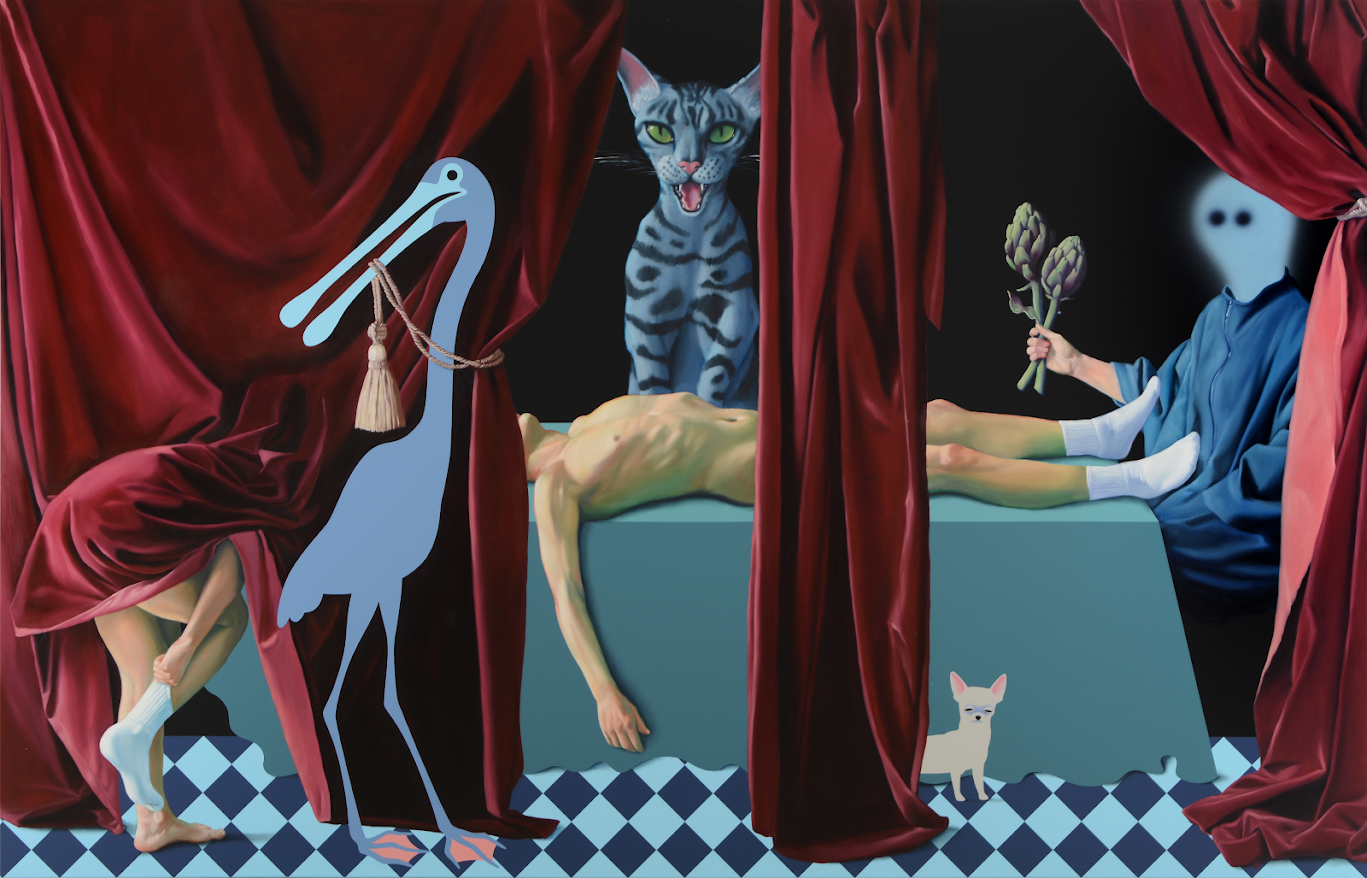
Máté Orr: White Socks ╱ 2023 ╱ oil, acrylic, canvas ╱ 180 x 280 cm