From metal sculptures to activist photos
The contemporary art collection of the K-ARTS Foundation
Gábor Ébli
Under the auspices of Art is Business, the Association of Hungarian Corporate Collections has recently been established. One of its founding members is the art foundation of the Kecskemét-based KÉSz construction group, which is providing logistical support for the installation being prepared for the 2026 Hungarian exhibition at the Venice Biennale of Fine Arts.
Kata Töttös: Bunny ╱ 2017
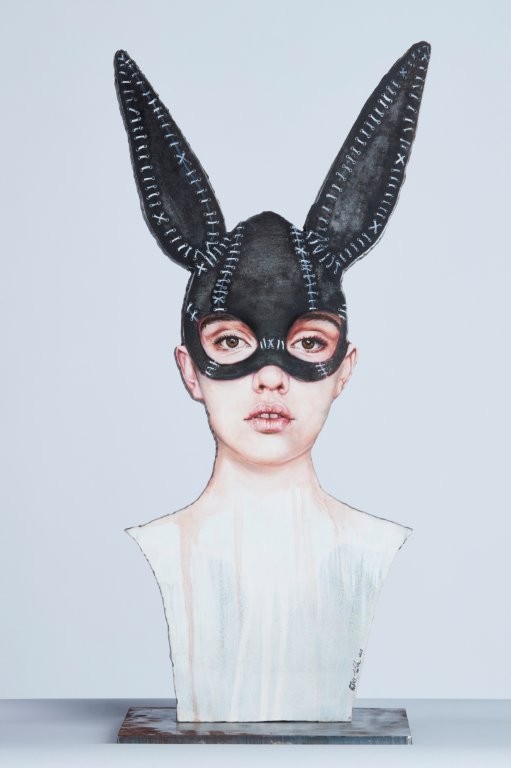
Kata Töttös: Bunny ╱ 2017
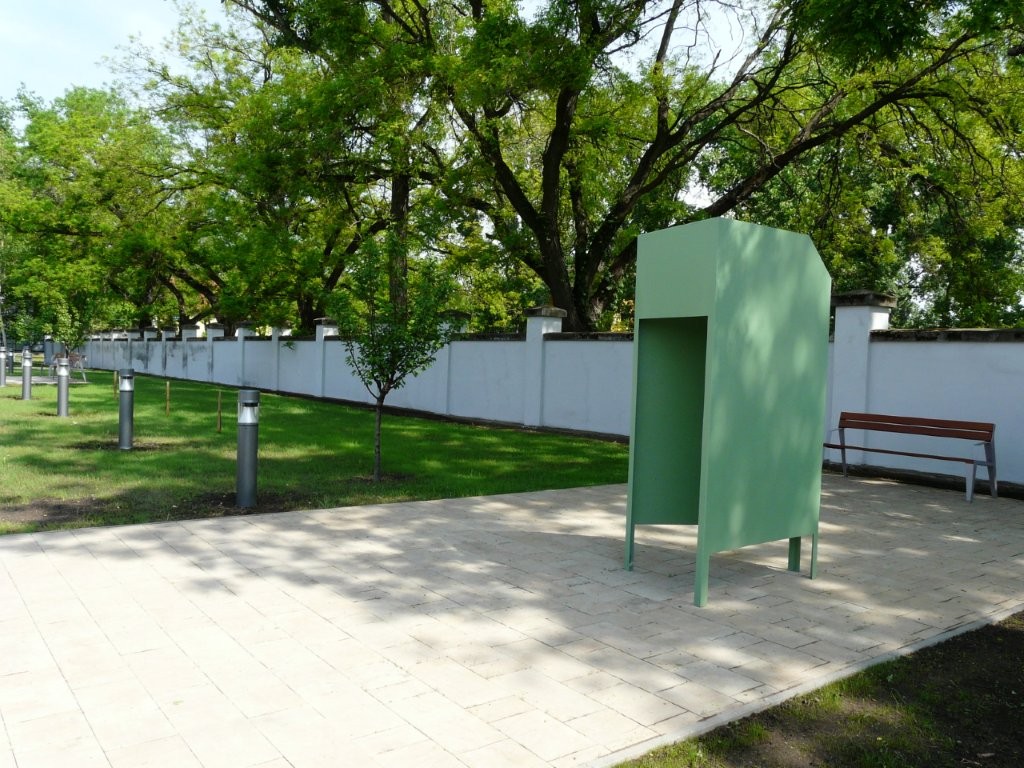
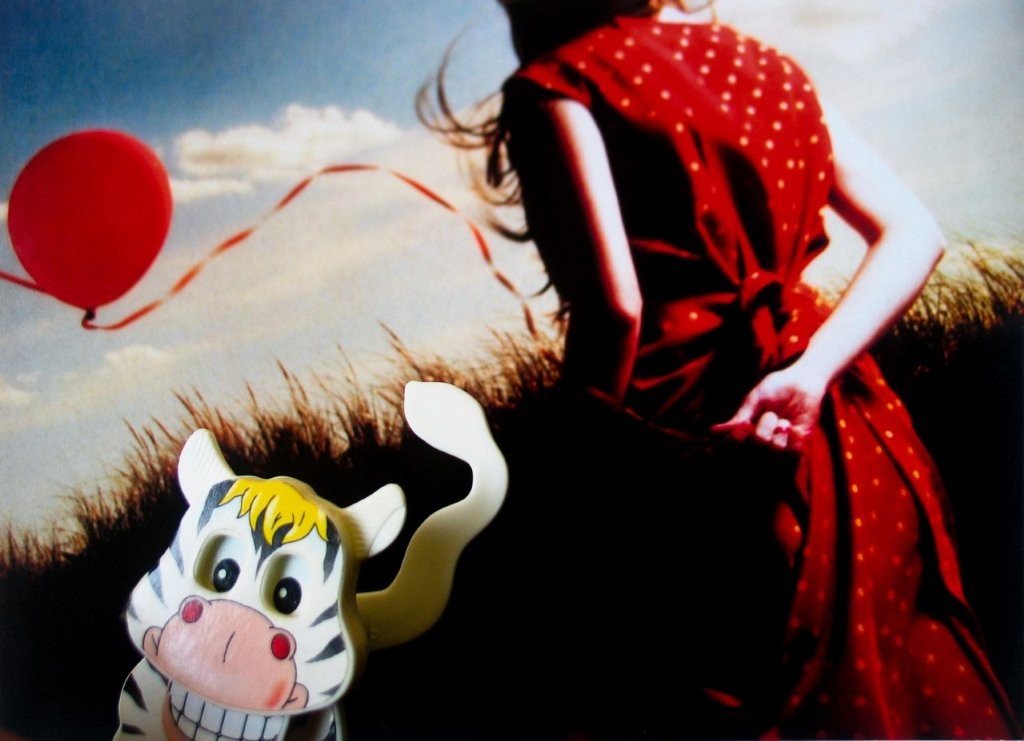
Lili Cseh: My Sky I. ╱ 2008
Icon image: Tamás Kopasz: Sphere ╱ 2005
Cover image: Pál Sándor Lakatos: Sign ╱ 2005
After the change of regime, corporate art collecting in Hungary began primarily on the initiative of international companies, as their leaders were familiar with this model from their parent companies abroad. From the 2000s onwards, it became increasingly common for domestically owned companies to also start supporting the arts. Among them were small and medium-sized enterprises that expanded their involvement in the arts in parallel with their growth. This required not only the commitment of the management, but also that of the owners.
The art projects of the KÉSZ Group are a good illustration of this development. The forty-year-old holding has been running an art programme since 2004. The Hungarian-owned real estate development, construction and management company has three components that contribute to its arts programme at the headquarters in Kecskemét. A wide range of industrial raw materials, technologies and specialists are available for use by the artists attending the creative camp held at the production plant every summer. One work by each artist is added to the company’s collection, which today ranges from Imre Bukta to Judit Rabóczky. The company also purchases works independently of the creative camp.
A sculpture park has been created from the outdoor sculptures in the publicly accessible area in front of the factory, featuring works by Gyula Baditz and Yusuke Fukui, among others. Some of the indoor works, such as metal sculptures by Áron Zsolt Majoros and József Szurcsik, are housed in the company’s own spectacular office building and in the neighbouring four-star hotel, also designed and built by them and operated by the Sheraton hotel chain. Other works from the collection can be seen in the company’s offices in Budapest and other parts of the country.
In addition to the summer creative camp, the company works on some kind of art project throughout the year, as artists regularly commission KÉSZ to create metal sculptures and installations for public spaces. The company created Ágnes Deli’s metal sculpture for the Kaposvár University campus and Tamás Kopasz’s steel installation for the Baja College building as part of the Universitas higher education programme. Borbála Szanyi’s public sculpture can be seen in Sajószentpéter while Ottó Vincze’s is in Kecskemét. In exchange for dozens of such collaborations to date, the collection is growing with additional works received from the artists.
Since 2013, artists other than sculptors have increasingly been participating in the programme. Contemporary art transcends genre boundaries, artists often switch between genres, which has prompted the collection to embrace diverse directions.
Today, sculptors and other artists are invited to the creative camp in equal proportions. The K-ARTS Art Foundation, established by the company to manage these creative processes, has a collection that is roughly equal in proportion to steel sculptures and other works representing all contemporary trends. Steel sculpture gives the collection its profile but no longer dominates it.
Anna Fabricius: Hungarian standard, Nurses ╱ 2007
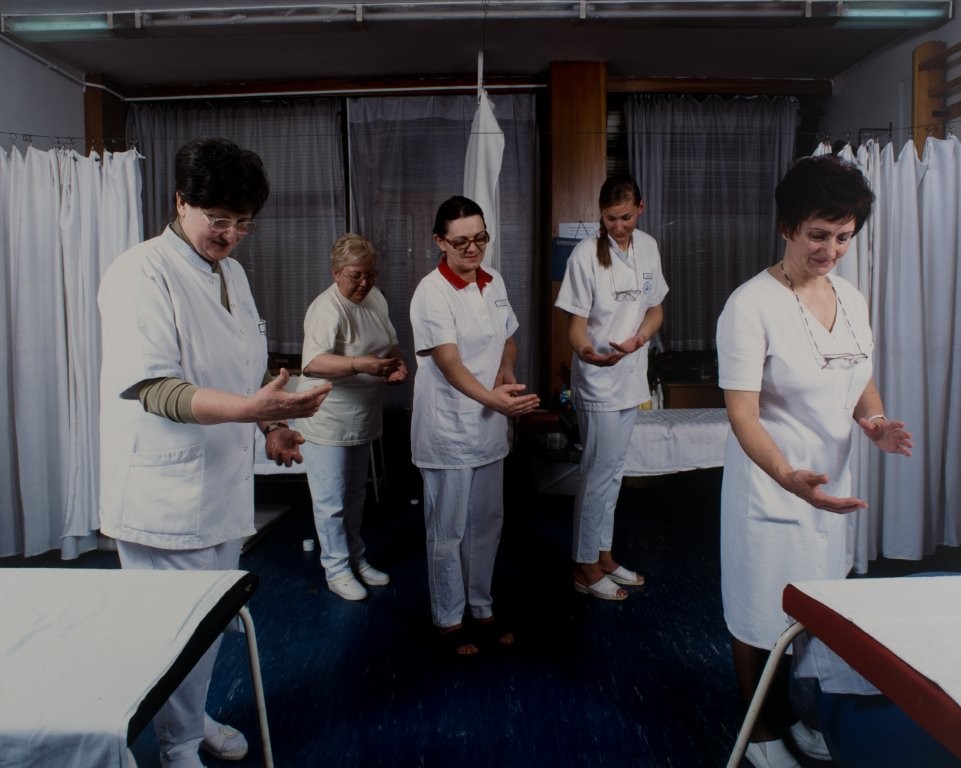
Anna Fabricius: Hungarian standard, Nurses ╱ 2007
Judit Rita Rabóczky: Crazy ╱ 2010
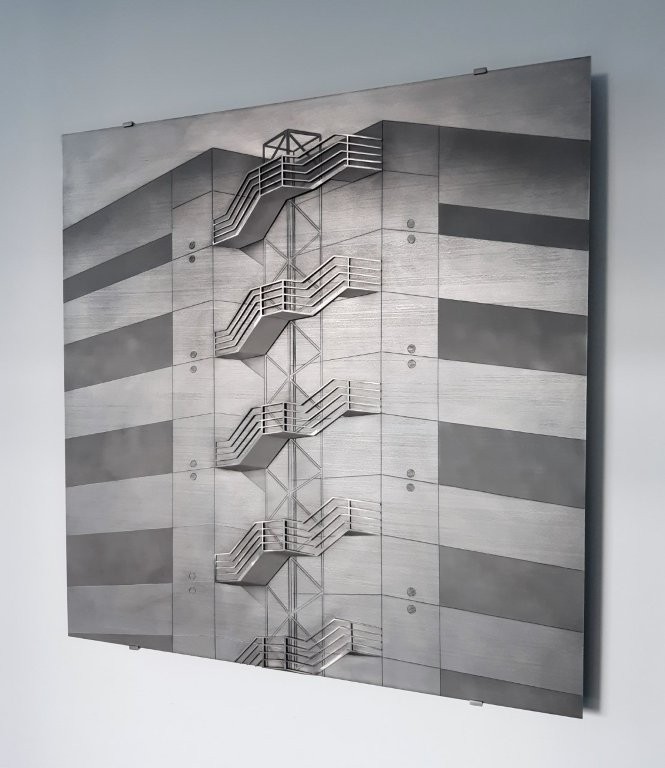
Marcell Dániel Németh: Exit II. ╱ 2020
Over the past two decades, more than a hundred artists have worked at the Kecskemét site, including many artists who are not necessarily associated with steel sculpture, from Zsófi Barabás to András Wahorn. In addition to more than 200 metal sculptures in the collection, including special steel objects by Pál Gerber, Ágnes Eperjesi and other artists not known as sculptors, the corporate collection contains some 350 works in pictorial format, roughly three-quarters of which are paintings, reliefs and graphic works, from József Bullás to Ágnes Szépfalvi, and a quarter are photo-based works.
This caught the attention of the Budapest Photo Festival, which presented a photo-based selection from the Kecskemét collection, ranging from Péter Puklus to Róbert Szabó Benke, at FUGA in Budapest in 2022, along two lines, one more aesthetic and the other openly social.
The metal sculpture collection has featured in several exhibitions, for example at the Artplacc festival in Tihany, at the Reök Palace in Szeged, and at the Limes Gallery in Révkomárom; as well as in two new selections in Budapest, in 2023 in Hegyvidék Gallery and in 2024 at the Esernyős Gallery in Óbuda.
Some of the works make explicit reference to industrial raw materials. The young sculptor, Andor Becskei, has been a guest at the creative colony on several occasions, and his lyrical compositions are based on the dialogue between steel and delicate, natural forms. György Buczkó is the doyen of Hungarian glass art, but his works created here do not shy away from the tense, geometric use of bent and welded two-metre steel plates, inviting the viewer to engage in a play of space and plane. Sándor Kecskeméti, who lives in Germany and is known for his intimate, abstract ceramic sculptures for the home, combines geometric metal forms in his nearly three-metre-tall outdoor sculpture entitled Movement in the collection in such a way that, defying their weight, they create the illusion of dynamic, and circular motion.
Metal sculptures can also be interpreted figuratively. Attila Mata welded together a dozen chrome steel rods to form a half-metre-tall figure, with the sculpture entitled Experiment balancing on the edge of recognisable human form. Ottó Szabó, known by his artist name Robottó, created a figure from recycled metal that is unmistakably human, or rather mechanical, robotic in form, carrying its heavy upper body and head on stick-like legs.
Yusuke Fukui (Japan): Object ╱ yagi – goat ╱ 2018
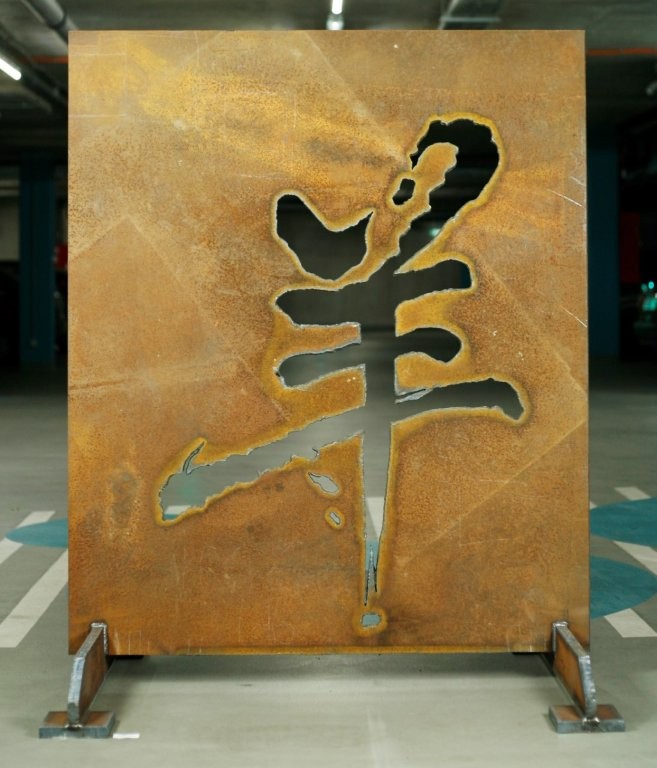
Yusuke Fukui (Japan): Object ╱ yagi – goat ╱ 2018
In the case of Kata Töttös’ Bunny, painted on a one-centimetre-thick steel plate, there is no doubt about the recognisability of the human – oh, I’m wrong again, rather the animal form and face; or is the work about the relationship between the face and the mask?
Two photographs printed on aluminium composite panels from Ági Verebics’ Industrial series have been included in the collection, both of which focus on raw, faceless figures that confront us with the present day.
Other works are more organic. József Tamás Balázs, working under the name Bajóta, created a fictional radiator design from real valves and steel pipes, but bent the pipes and twisted them like intestines, so that the sculpture remains in a fantasy space between a fairy-tale-like flow and an almost untangled knot.
Szilárd Cseke’s series of paintings depicting the abstract interplay of light filtering through the forest and colourful leaves took on sculptural form in Kecskemét: the silhouettes cut into CorTen steel evoke the silence of the forest and the natural environment, with the deliberately rusted surface alluding to falling leaves.
Numerous works use steel in such a way that the result demonstrates the freedom of genre between three-dimensional sculpture and two-dimensional image. The work in the collection from Bianka Dobó’s Memorial series is a four-centimetre-thick steel relief, which, thanks to the LED lighting behind it, gives a special nocturnal aura to the figure resting a scythe somewhat menacingly on its shoulder against the urban backdrop.
Dáriusz Gwizdala painted a half-human, half-animal figure making a victory sign with his fingers in graffiti style on a steel plate cut into an irregular shape with a flame cutter, which he propped up on the ground with a long steel sheet, making the work a sculpture, painting and urban public installation all at once.
Adrián Kupcsik: Gypsy Self-portrait ╱ 2008
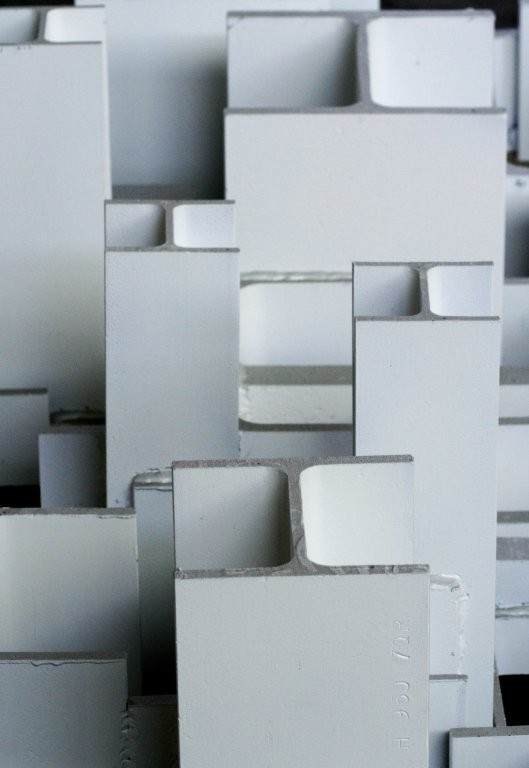
Balázs Csepregi: Down Town I. ╱ 2008
Ágnes Eperjesi: Rolling Bucket ╱ 2020
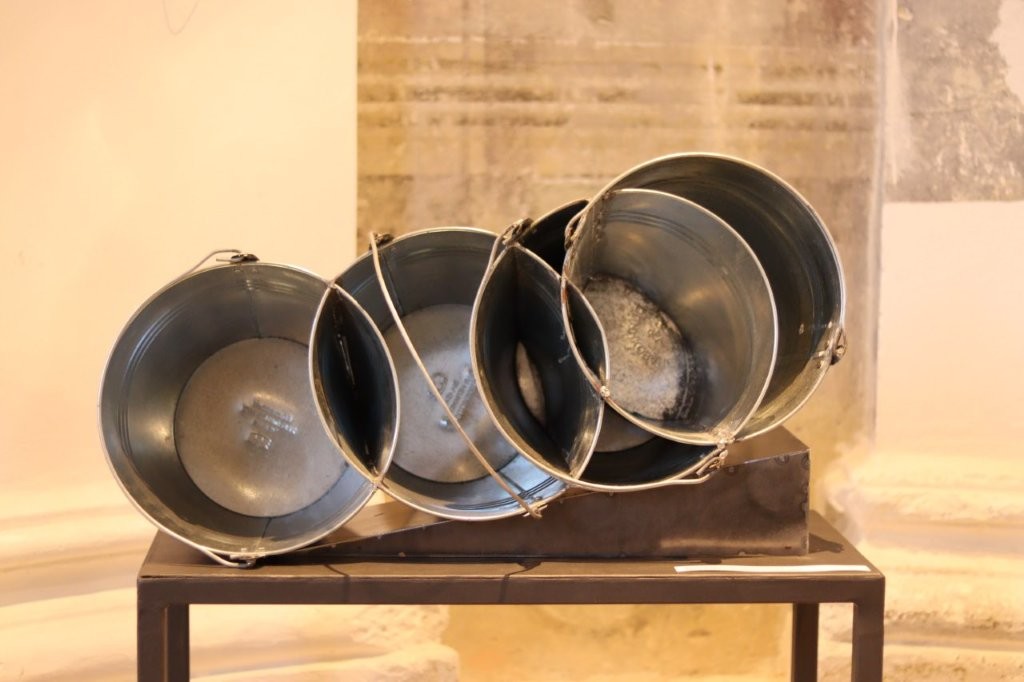
Ágnes Eperjesi: Rolling Bucket ╱ 2020
In keeping with the spirit of contemporary art, the works often defy simple interpretation and seek instead to unsettle the viewer. Tamás Gaál, a professor at the Department of Sculpture in Pécs, has assembled a bench from galvanised steel sheets with a noble surface finish, inviting the viewer to take a comfortable seat with its gleaming appearance, only to find that the outdoor seating is so irregular that it is not practical to sit on. Who would think of mistaking a work of art for public furniture? Ferenc Hack’s steel sculptures also invite touch and interaction – if it weren’t for the occasional sharp metal spike sticking out of them. Tamás Kopasz bent iron wires to form the title of the work, Reclining Angel, combining the dreamlike, magical creature with the vibrant tension of raw, industrial wires.
The connection to architecture is a recurring theme. Balázs Csepregi’s Downtown, a three-metre-diameter urban model that can be placed on the ground, consists of steel shapes that have been cut into small pieces, painted snow-white and then assembled into an urban vision. Marcell Németh uses laser cutting to shape the steel plate so that the grey, cold surface evokes lean buildings and infrastructural patterns that are precisely engineered and useful to human existence, yet devoid of shapes, movement and scenes. Tibor Zielinski’s column entitled Souvenir is an internally illuminated, pentagonal steel prism, each side of which has been cut by the artist with a plasma cutter into a different urban image.
While most of the metal sculptures reflect the colour palette of steel, there are a few healthily frivolous exceptions. White silicone oozes out of István Erőss’s metal cube titled Internal Tension, pierced on all sides. Antal Plank’s wave-shaped sculpture, placed on a pedestal, glows in the bright green of grass. Gábor Roskó, known for his passion for bicycles, created a two-metre-tall, fictional bicycle lock and painted it a noble, distinguished blue.
Máté Fock welded a single-person „suicide submarine” with the fantasy name Titusz Dugovics, painting it in three colours, with the only warm colour covering the smallest surface area in contrast to the two cold colours, yet conveying the playfulness and paradoxical cheerfulness of the object. Mihály Gyurcsovics also formed a basically dark crater in a pool assembled from steel plates, but from its depths hidden lighting radiates the transcendent light of hope.
Many of the works involve their surroundings. Lili Cseh offers a small private slice of sky to those who enter the steel sculpture, reminiscent of a cabin or booth, and look up from it. Ágost Koppány Erős’s snow-white steel cylinder, standing outdoors, seems to capture the moment of rolling. Two works from Tamás Gilly’s two-metre-long series of sarcophagi and chests can be found in the collection, and both bear only one infinitely abstracted, majestically condensed motif, such as a tulip on a tulip chest, thus raising the question of what might be inside the metal monster.
Roland Kazi has created a small but complete multimedia installation that communicates with the outside world through LED-based light and motorised movement. Pál Sándor Lakatos’s six-metre steel arch in the park in front of the company office building in Kecskemét can also be viewed as a gateway inviting visitors to step through. Gyula Majoros, one of the founders of the camp, produced compositions based on wordplay and contradictions (Overflows, Pipe Breaks).
Norman White (Canada): Venus of Kecskemét ╱ 2006
Szilárd Cseke: Autumn over the Mountains ╱ 2006
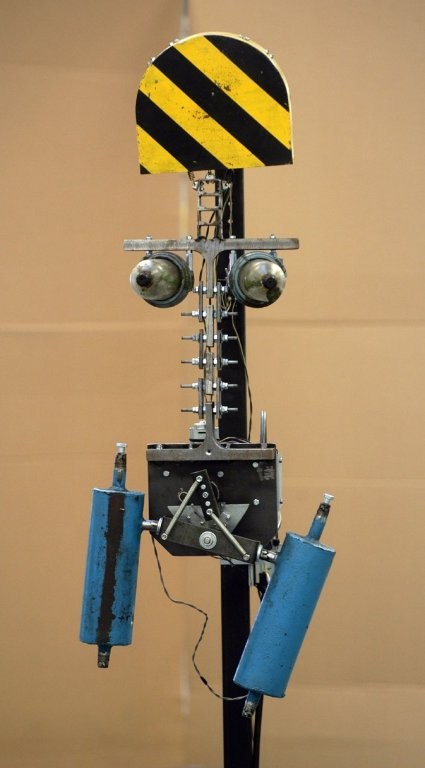
Norman White (Canada): Venus of Kecskemét ╱ 2006
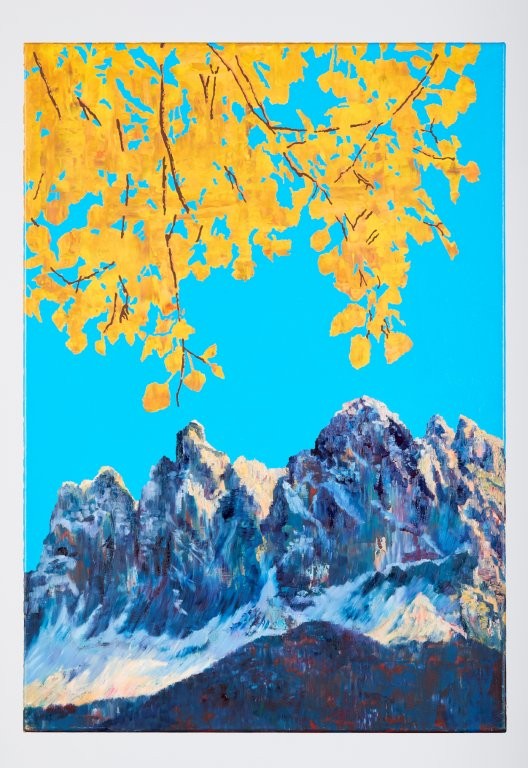
Szilárd Cseke: Autumn over the Mountains ╱ 2006
Krisztina Erdei: 69. 2003. 04. 21. 17.21, Budapest 2/6 ╱ 2003
While presenting a wide range of Hungarian artists, from Márton Barabás to Attila Rajcsók, the collection also features an increasing number of foreign artists from India, Taiwan, Iran and many other countries. One of the main directions for further development is closer international integration: such a collection of (steel sculpture) works of art can be interpreted and exhibited in a global context, or, considering the difficulty of transport, at least published online. As the activities of the KÉSZ Group become increasingly international, the art programme and the collection can be positioned in an increasingly international manner. This was exemplified by their latest exhibition in the spring of 2024 at the Liszt Institute in Helsinki, which was preceded by the participation of several Scandinavian artists in the 2023 summer creative camp. A selection of the material was later also on display at the B32 Gallery in Budapest.
The collection’s internationalisation is also facilitated by the fact that the series by Tibor Gyenis, Anna Fabricius, Krisztina Erdei and others from the image format section of the collection can also be organically integrated into international art processes. The series of paintings by Adrián Kupcsik, who has been living and working in Germany for a long time, revolves around the theme of identity, and can be exhibited independently or combined with the similarly themed photo project Phantom Images by the artist duo Péter Rákosi and Gergely László, who work under the name Tehnica Schweiz (deliberately misspelled).
The collection is complex enough in terms of genre and theme to be presented outdoors or in an exhibition space, as a chamber exhibition or as a broad overview. Although the weight of steel and the increased transport costs in recent years make travelling exhibitions difficult, digital solutions can be used. The collection could be excellently presented in the form of regular, playful posts on social media that engage the audience.
The range of works on public display has also been expanded by the company’s donation of two public metal sculptures to the city of Kecskemét. The two five-metre-high sculptures have been placed in the centre of two roundabouts on the urban section of the 52 main road.
Gábor Király: Iron Gardener ╱ 2014, 2024
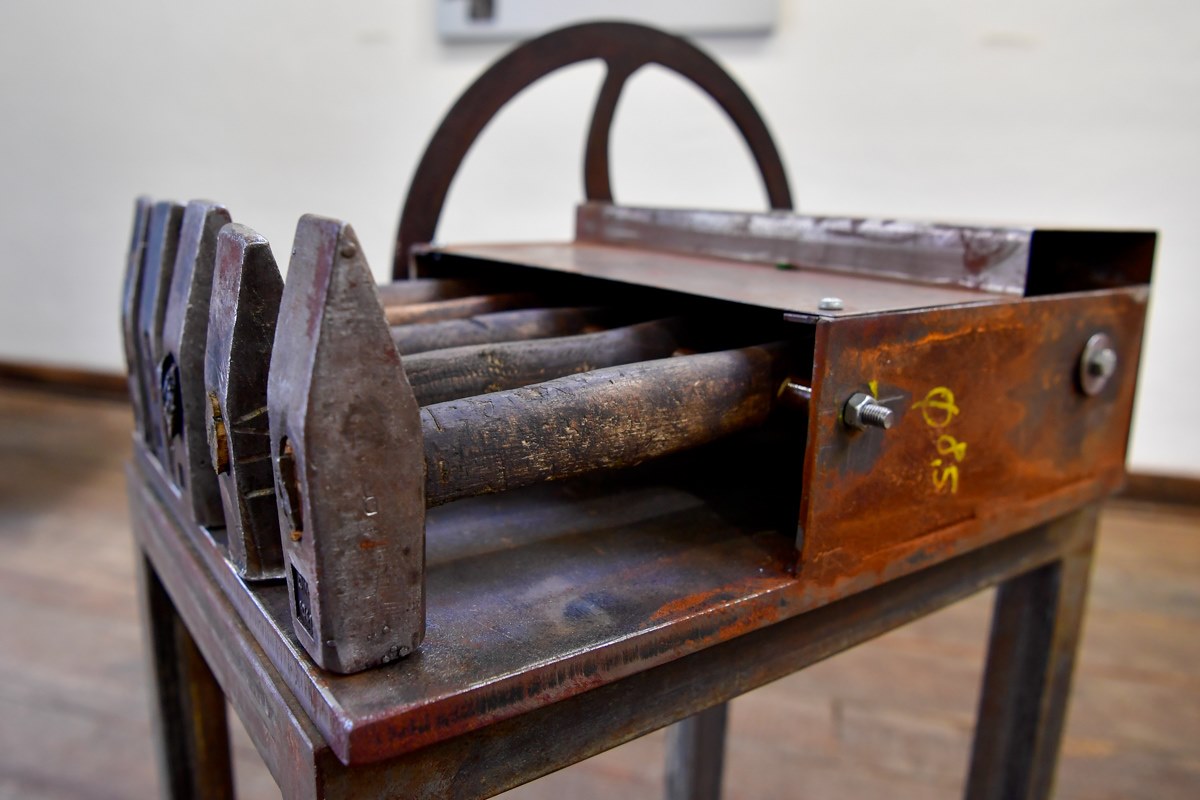
Pál Gerber: Finished Work ╱ 2015