From Nagybánya graphics to contemporary photo works
Paper-based art in the collection of László Jurecskó
Gábor Ébli
Miklós Bay, an art collector of Transylvanian origin who worked as a doctor in Germany and became a researcher of János Thorma’s art and main sponsor of a book published about the painter, donated a selection of 35 artists from his collection of the Nagybánya Art Colony to the municipality of Kiskunhalas in 2017. The city expanded the Thorma János Museum with a new wing, where a permanent exhibition of the donation and Thorma’s art has been on display ever since, and every autumn, a temporary exhibition dedicated to the art of Nagybánya is held, partly borrowed from private collections. In 2025, the exhibition presented a selection from László Jurecskó’s collection, by a broad range of artists, from Simon Hollósy to Sándor Ziffer and Olivér Pittner.
Lajos Tihanyi: Standing male nude ╱ 1909
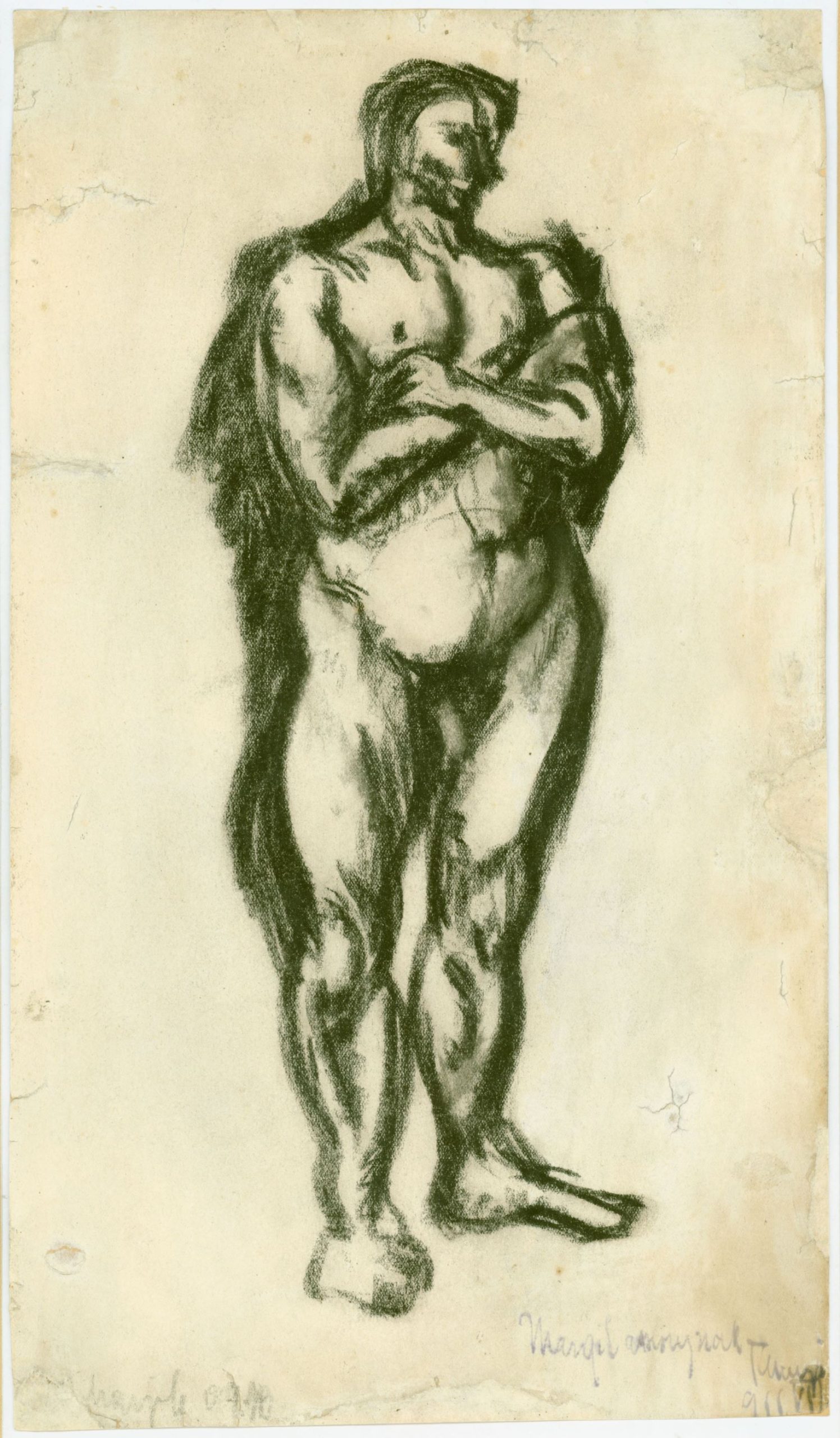
Lajos Tihanyi: Standing male nude ╱ 1909
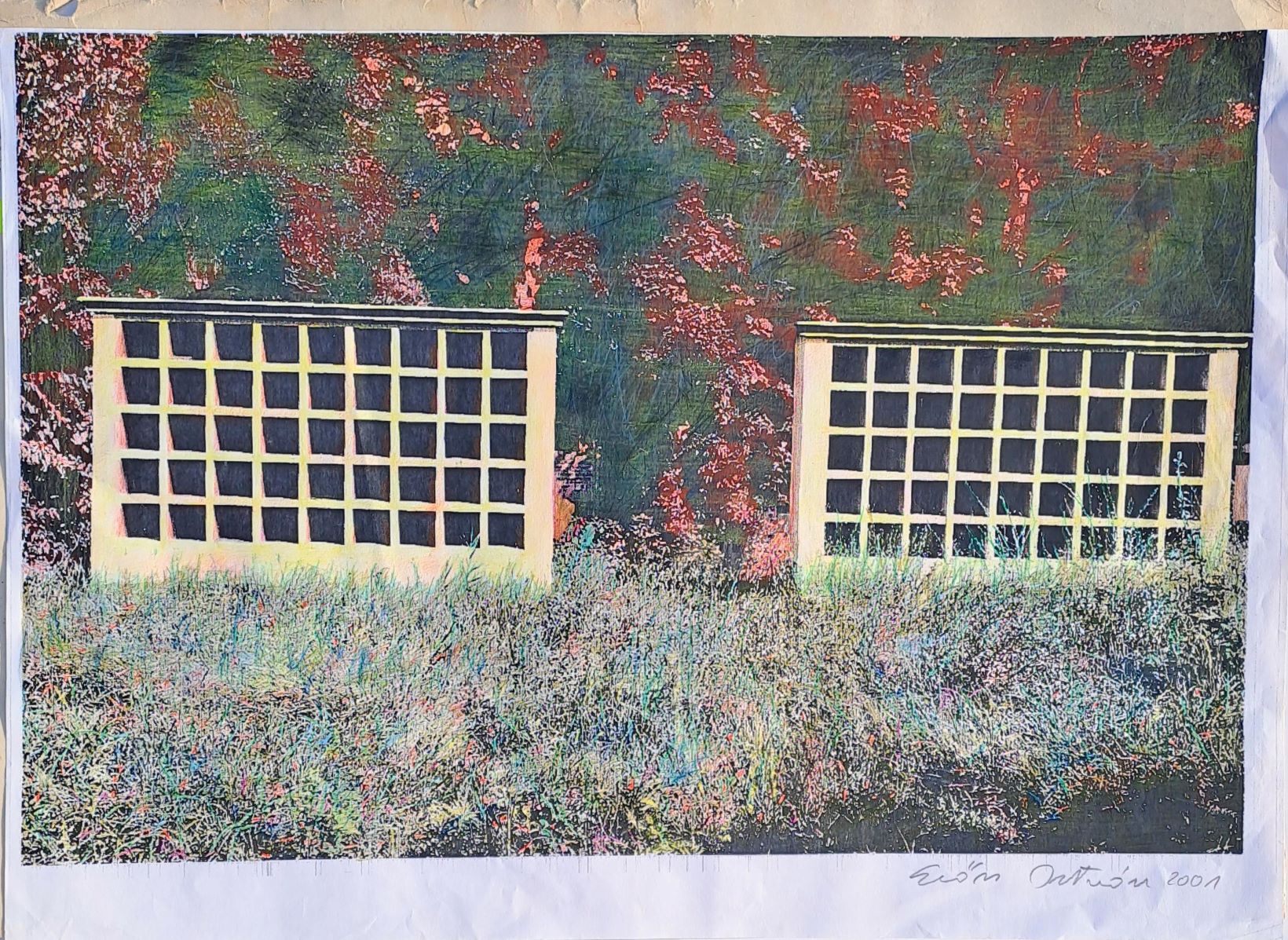
István Erőss: Garden ╱ 2001
Icon image: Tibor Boromisza: Threshers ╱ 1912
Cover image: Jenő Lévay: Paternoster ╱ performance documentation photo ╱ 1993
Behind this project, three professional roles of your work come together: art historian, gallery owner and collector. How did you get into this career?
I was born in 1954 and spent my childhood in a village of 300 souls. I graduated from high school in Miskolc, specialising in French. One of our teachers, the painter Lívia Keller, steered me towards art history. I graduated from ELTE with a degree in folk culture and history, then while working, I completed a degree in art history as a private correspondence student. From 1982, I worked at the Miskolc Gallery until 1990, when Zsolt Kishonthy – who had also been working as an art historian in Miskolc since 1980, in the fine arts collection of the Herman Ottó Museum – and I founded the MissionArt Gallery. The story of this and the professional achievements of the three and a half decades that have passed since then are now recounted in a life interview with the two of us by András Bánó, published in the seventh volume of the Műértők (Art Experts) series of conversation books published by Kálmán Makláry.
How did art collecting relate to your work as an art historian and gallery owner?
It came naturally from both. At that time, the Miskolc Gallery organised the Miskolc Graphic Biennial, which had been in existence since 1961. When I started working there the following year, in 1983, I became closely acquainted with graphic techniques and ways of thinking. We visited studios, and I gave a series of public lectures on graphic techniques using the recordings made there. Without special training, it is not easy to distinguish, for example, between copperplate engraving and the mezzotint process. I had to gain a deep understanding of the world of graphic art in order to be able to serve credibly on the Biennale jury. This became a love affair that continues to this day. Through the Winter Exhibitions in Miskolc, I also had personal contact with many living artists. In my work, I dealt mainly with contemporary art, and within that, graphic art in particular allowed room for experimentation. At the MissionArt Gallery, we stood on two legs from the very beginning, with contemporary exhibitions made possible by the sale of classic modern works. This is where I came across prints that were hardly worth anything in the 1990s and would have been difficult to sell, but it would have been a sin to pass them up. That is how I bought my first graphic work thirty years ago, a drawing by Károly Kernstok from around 1907. Over time, I began to consciously develop the collection on both the modern and contemporary fronts, so, for example, I have works by all the grand prize winners of the Miskolc Graphic Biennial, which has been held every three years since 2008.
You organised the exhibition in Kiskunhalas and wrote the catalogue essay, published as the 58th volume in the Thorma János Museum Books series. What is the concept behind the exhibition?
The term „Nagybánya graphics” does not only refer to works created locally. It also includes the works of artists who stayed in the city for shorter or longer periods of time and for whom Nagybánya, today Baia Mare, Romania, played a significant role in their artistic development. The selection is enriched by works created in Transylvania, Banat and Hungary, as well as Western European works that mark the end of their artistic careers. The time span is also broad, ranging from the 1890s to the works of Oszkár Nagy created in 1959. And since my collection is guided by historical, geographical and thematic awareness, it includes not only the works of leading masters, but also those of second- and third-tier artists, drawing attention to lesser-known names and works, including those of numerous female artists, such as Lilla Csizér, Rózsa Deliné Bacher and Janka Olejnik. The 116 works also reflect my personal priorities: Tibor Boromisza, Vilmos Perlrott Csaba, Hugó Mund, József Klein and János Mattis Teutsch are my favourite artists.
Hugó Mund: Members of the Nagybánya Painters Society ╱ 1920s
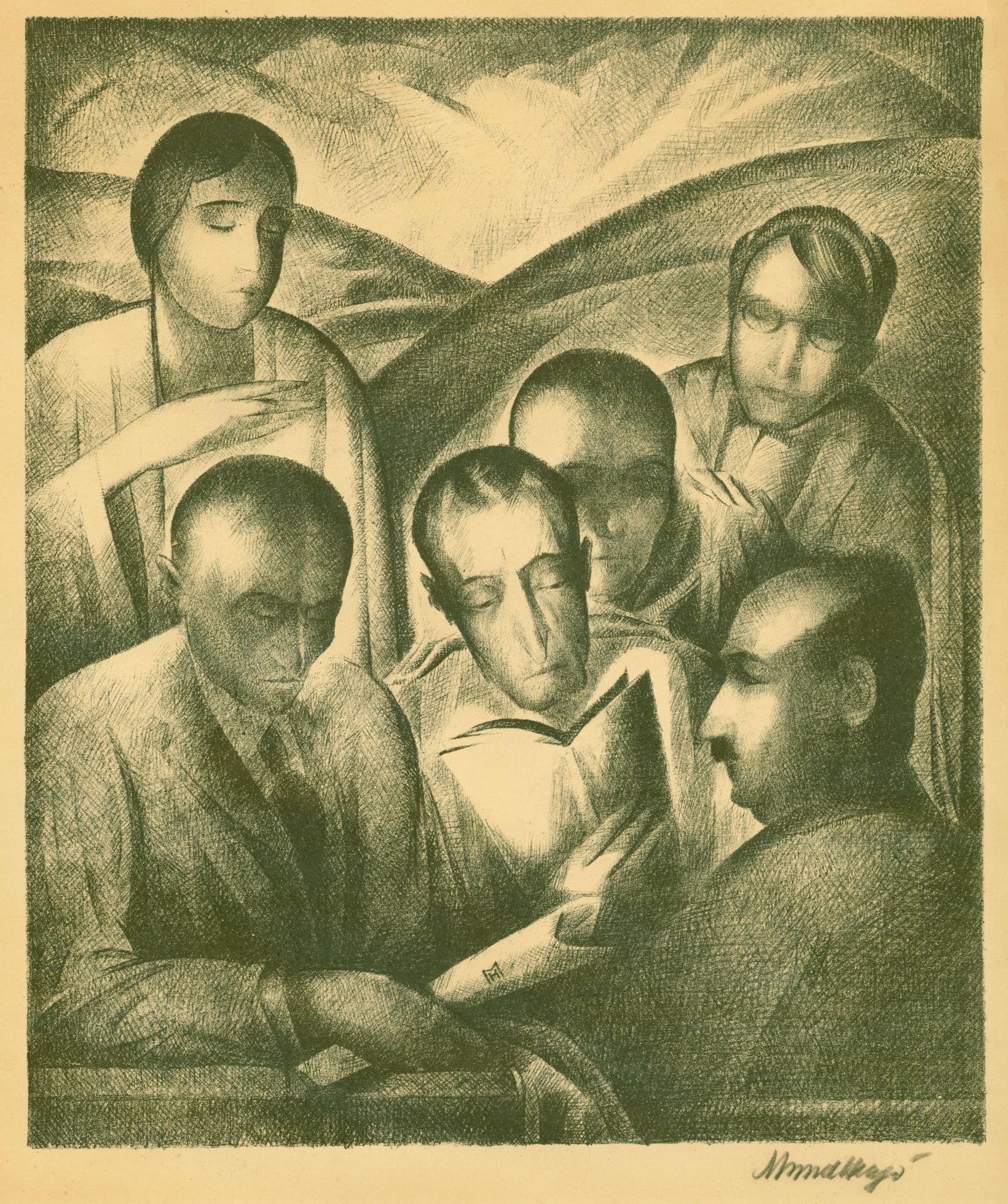
Hugó Mund: Members of the Nagybánya Painters Society ╱ 1920s
How did you divide the exhibition into eight sections?
The first contains drawings by the founders and the nude studies that formed the basis of their education, through the works of Károly Ferenczy and Antónia K. Csíkos, the wife of János Krizsán. The second section features works conceived in the spirit of Art Nouveau and Symbolism, such as those by Gyula Tichy and Attila Sassy. The third section presents the Neo-Classical artists through the works of Béla Iványi Grünwald, András Mikola, Lajos Tihanyi, Sándor Ziffer, József Pechán and others. The fourth section displays works by Hungarian avant-garde artists such as Imre Szobotka, Gizella Dömötör and others. The fifth section consists of neoclassical compositions by the so-called copperplate engraving generation – Imre Patkó, Vilmos Aba-Novák and their colleagues. The sixth section consists primarily of landscape and cityscapes by artists who lived in Nagybánya between the two world wars, such as Endre Litteczky, Ignác Udvardy and the lesser-known Count Ralph Teleki. The seventh section is devoted to the art of József Klein, a master of left-wing artists, as well as a block of reproduced graphics. The eighth section features unique prints made in Nagybánya and its surroundings, as well as depictions of people working there, from Noémi Ferency to János Kmetty, extending into the period after the Second World War.
What is the main message of the exhibition?
At the artists’ colony, they created works in various styles of modern Hungarian art, using a variety of techniques and focusing on topical themes. This testifies to the abundance of inspiration that Nagybánya provided for over half a century, even under radically changed circumstances. And not only in painting, which we automatically associate with Nagybánya through plein-air painting, but also in the undeservedly neglected field of graphic art! I hope that the exhibition will encourage experts to explore the hitherto unexplored connections between Nagybánya’s graphic art and painting in the broadest sense.
Your commitment to paper-based art, as well as the connection between your roles as an art historian and gallery owner, is also evident in the contemporary part of your collection.
Through the Miskolc Graphic Biennial, I became closely acquainted with the graphic works of Gyula Feledy, Gábor Pásztor, Csaba Rékasy and Aladár Almássy, for example, and distinctive works by them found their way into my collection. It was also through the Biennial that I became close friends with Árpád Szabados. When his first works appeared at the Biennale, which were partly offset, partly screen-printed and photo-based, many people protested that they did not belong there. However, time has proven the compatibility of these techniques! That is why we published a book about Szabados’s photographic works at the MissionArt Gallery. We could also mention Imre Kocsis, whose graphic and photographic compositions are on a par with his paintings. There are also discoveries, such as Zsuzsi Ujj. All we knew about her was that she was a singer and songwriter. We heard from a friend that she had also taken photographs in the second half of the 1980s. But even after three years of asking, she refused to show us her work. And when these boxes finally emerged from under the bed and behind the wardrobe, it turned out that they were internationally exciting. The MissionArt Gallery’s latest major contemporary project was the acquisition of András Baranyay’s estate. This collection of 800 works consists mainly of graphic art, with some photographs. We turned it into a catalogue of his life’s work and a major exhibition, then handed it over to another gallery so that it could be taken to an international level. Another example is Ágnes Verebics, whom we have exhibited regularly at the gallery since she was a young artist. I have included photographic works by each of these artists in my collection.
Árpád Szabados: For H, on Rembrandt ╱ 1981
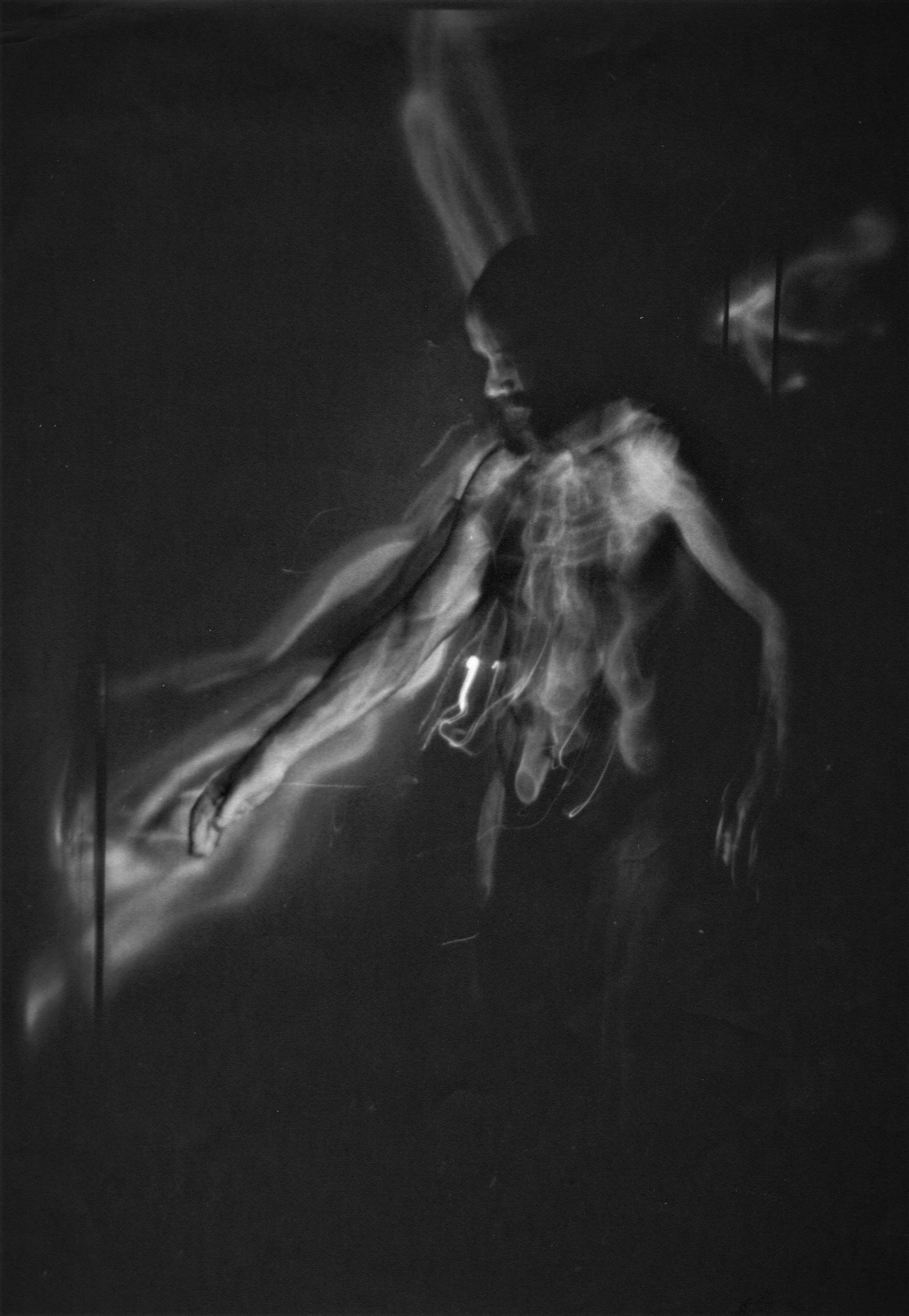
Árpád Szabados: For H, on Rembrandt ╱ 1981
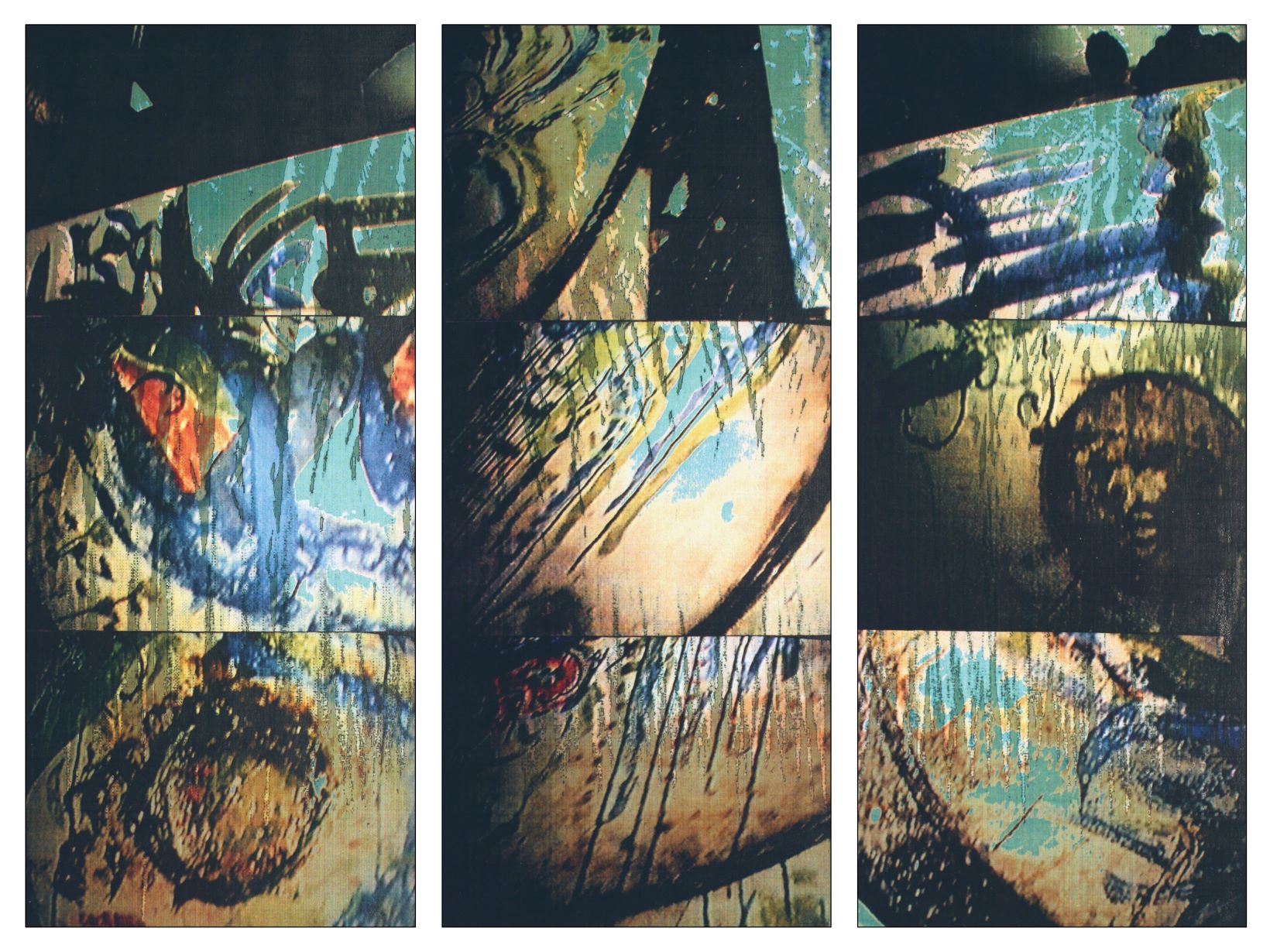
Jenő Lévay: Paternoster I-III. ╱ 1995
Olivér Pittner: View of Felsőbánya ╱ 1938
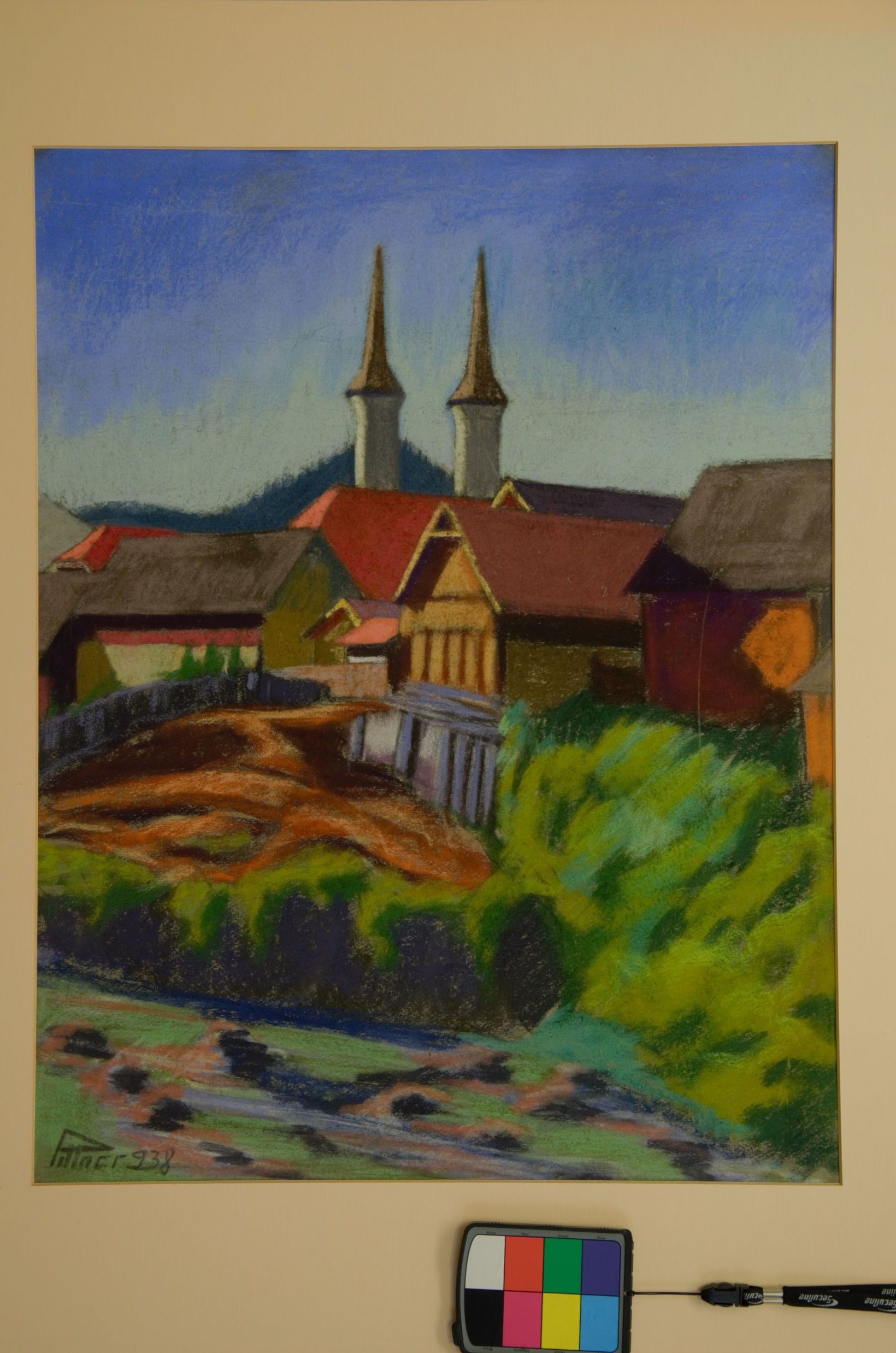
Olivér Pittner: View of Felsőbánya ╱ 1938
Is it the artist or the artistic style or theme that determines your choices as a collector?
My collecting is mainly related to the exhibitions we organise at the gallery and our book publications. As in our gallery work, personal relationships with artists are also decisive in my choices as a collector. I acquired photo-based works from Jenő Lévay, András Lengyel, István Erős and Sándor Pinczehelyi as a token of our friendship. We call these compositions “photo works” because they are created by visual artists with an artistic intention, which is a different context from photography in the strict sense. Finally, let me mention two contemporary classics, Tibor Hajas and Péter Gémes, whom I did not know personally due to their early deaths, but as a gallery owner, we built a close relationship with their families, exhibited their works several times, and their photographic works are important pieces in my collection.
Jenő Lévay’s series exemplifies the synthesis of artistic forms of expression from video to graphics, via photography. Based on his performance held at Miskolc University in 1993, his Paternoster project is available in a short video documentary online[1], and features a series of three graphic works in your collection.
In fact, this is the series that earned him the Grand Prize of the Biennial in 1996, exactly thirty years ago. This year’s jubilee catalogue – published to celebrate overall 65 years of the Biennial – includes an essay by Lévay that tells the artistic background of his performance from which he subsequently produced this large-scale series.
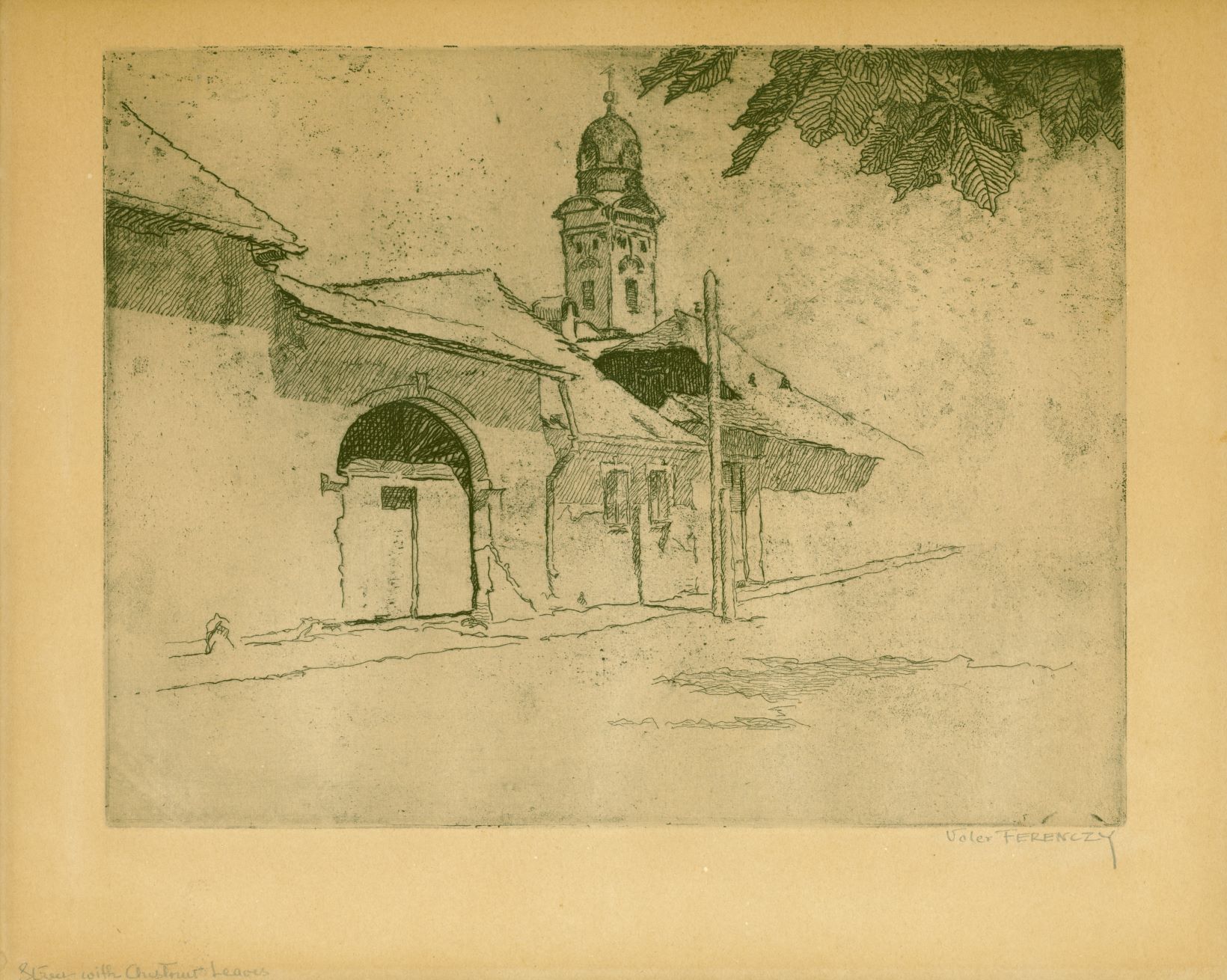
Valés Ferenczy: Detail of Nagybánya ╱ 1910s