A Gen Z násza a trendek teraszán
Erdélyi Léna, Szabó Ferenc és Székely Virág Szirom kiállítása
Kis Róka Csaba
Tisztelt biológiai entitások, sejtcsoportok és digitális árnyékok! Üdvözlök mindenkit ebben a steril vákuumban, amit mi – a későkapitalizmus utolsó, remegő sejtjei – kiállítótérnek nevezünk. Ma nem képeket nézünk. Ma a Z generáció kollektív, üvegszálas magányának boncolásán veszünk részt, érzéstelenítés nélkül. Kis Róka Csaba vagyok, hiba került a rendszeretekbe, és azért jöttem, hogy kis címekkel ellátott epizódokkal tépjem fel az érintőképernyők mögött rothadó húst.
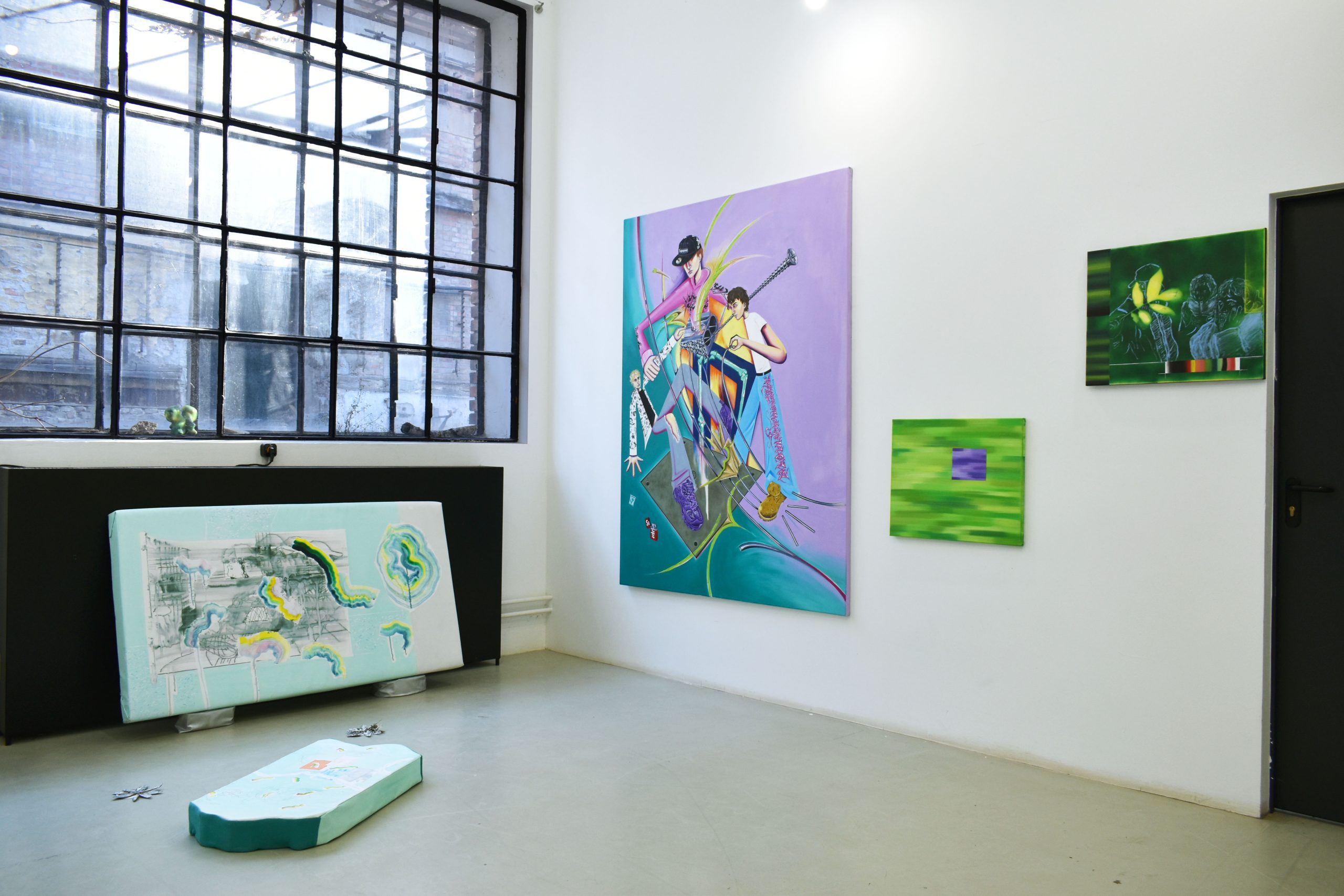
Kiállításenteriőr [Exhibition view]: Aporia ╱ Textilgyár ╱ 2026 ╱ Ph/fotó: Bajáky Boglárka
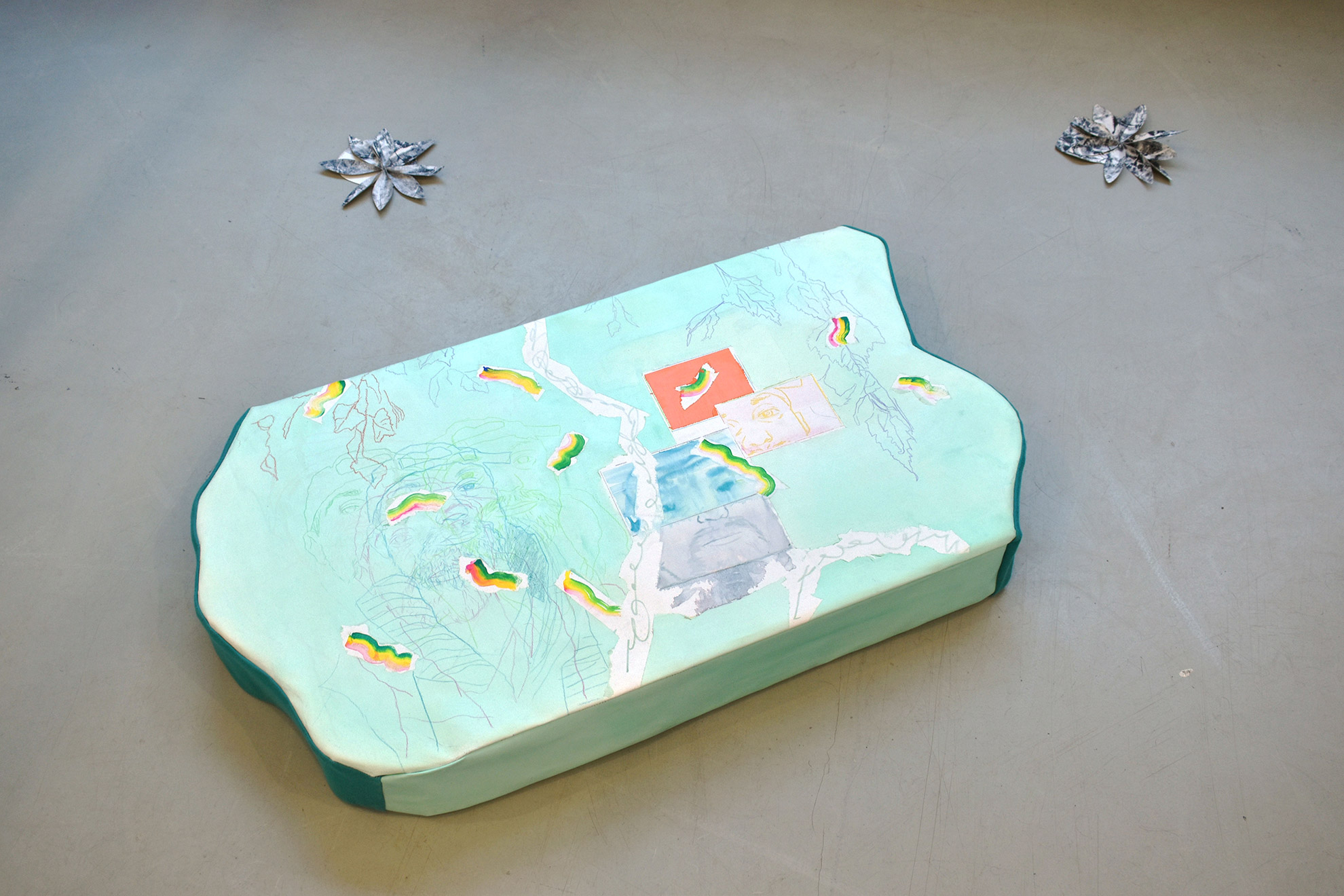
✨ SZABÓ Ferenc [@szabrenc]: Never go back to 1999 II. ╱ mixed media / vegyes technika ╱ 45×68 cm ╱ Ph/fotó: Bajáky Boglárka
Icon image:✨ SZABÓ Ferenc [@szabrenc]: Never go back to 1999 III. ╱ mixed media / vegyes technika ╱ 44×66 cm ╱ Ph/fotó: Bajáky Boglárka
Cover image:✨ ERDÉLYI Léna [@lena_erdelyi]: Embryo_3 (1/2) ╱ részlet / detail ╱ oil on canvas / olaj, vászon ╱ 150×100 cm ╱ Ph/fotó: Bajáky Boglárka
A magány kémiája
Ők már nem emberek. Adatzselatinok, akiket belegyömöszöltek az algoritmusok szűkös inkubátoraiba. A magányuk nem a pusztai farkasé, nem a romantikus költőé. Az ő magányuk olyan, mint a hűtőházban felejtett, vákuumcsomagolt parizer: kívülről csillog, belül pedig egy szürkés, felismerhetetlen massza. Allergiás reakcióik igazolják önmaguk biológiai létezését.
A dopamin-GULAG rabszolgái. Minden egyes like egy-egy gramm virtuális cukor, amit a rácson keresztül tolnak be nekik. De a rács marad. A falak nem kőből vannak, hanem kék fényből. Digitális hullamerevségben tengődnek, a hüvelykujjak már külön életet élnek, önálló parazitaként görgetik a semmit, miközben a szívük lassan leáll a valódi érintés hiányától.
A Z generáció az első, amelyik rájött, hogy a test csupán egy elavult hardver, egy kényelmetlen hússzerver, amire rá kell feszíteni a márkajelzések színes textúráit, akárcsak a vásznat a keretre. A divat számukra nem önkifejezés. Hogyan is lenne az, amikor az „én” csupán egy gyengén megvilágított pixelhalmaz a metaverzum hátsó udvarában? A divat már nem stílus, hanem páncélzat a valóság ellen. Minél több réteget veszel magadra, annál inkább elhiszed, hogy létezel.
Mi látható itt valójában? Egyrészt a nosztalgia iróniája: miért hordanak a mai fiatalok kilencvenes évekbeli rongyokat? Mert az agyukat irányító marketingdementorok rájöttek, hogy a múlt az egyetlen hely, ahol még nem omlott össze az illúzió. Másrészt logómánia: minden felirat egy-egy mantra. A Nike-pipa nem egy logó, hanem egy rituális pecsét, ami megvédi a viselőjét attól, hogy szembe kelljen néznie saját belső csendjével.
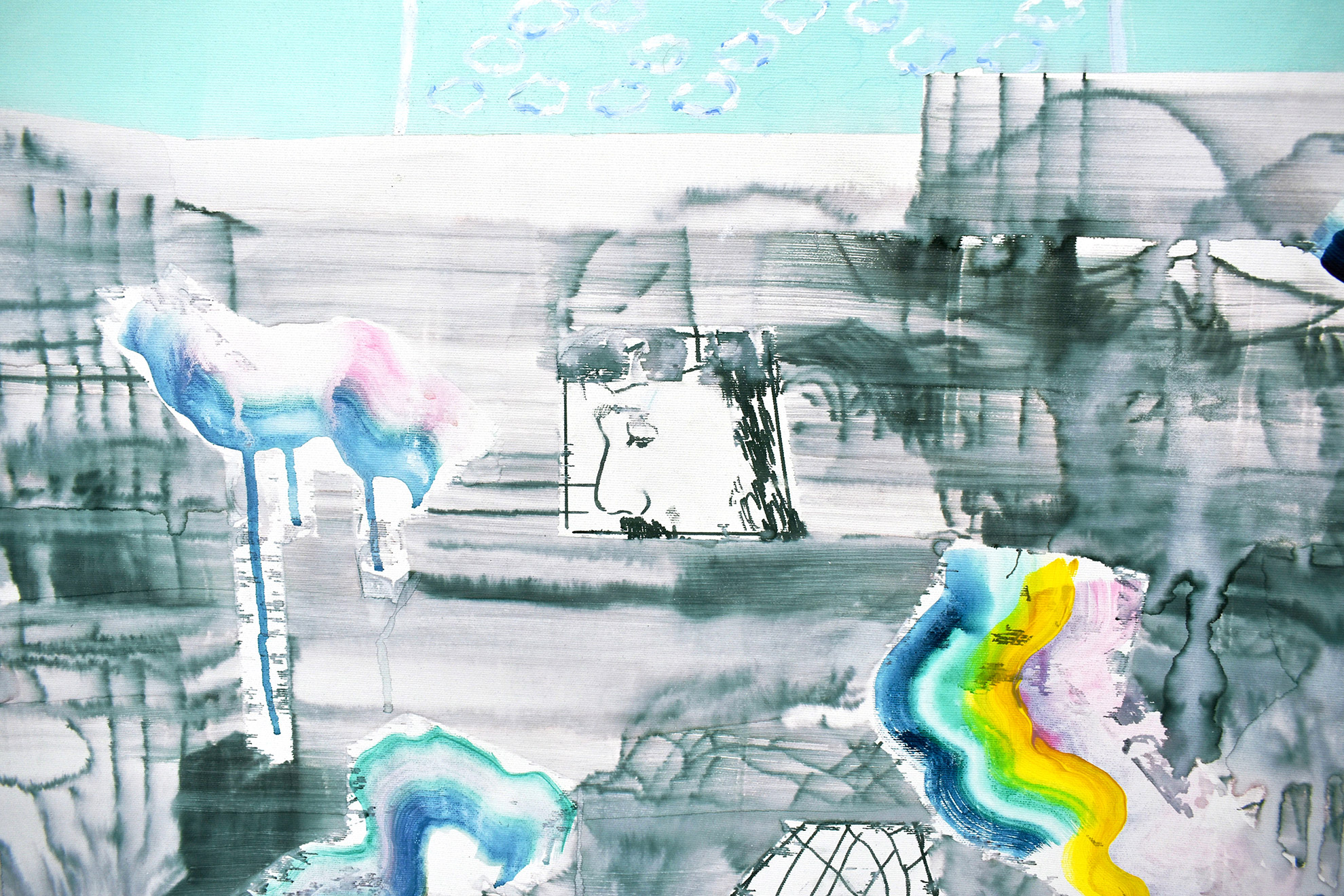
✨ SZABÓ Ferenc [@szabrenc]: Never go back to 1999 ╱ részlet / detail ╱ felt-tip pen, oil, canvas, sponge / filctoll, olaj, vászon, szivacs ╱ 87×157 cm ╱ Ph/fotó: Bajáky Boglárka
✨ SZABÓ Ferenc [@szabrenc]: Never go back to 1999 III. ╱ részlet ╱ mixed media / vegyes technika ╱ 44×66 cm ╱ Ph/fotó: Bajáky Boglárka
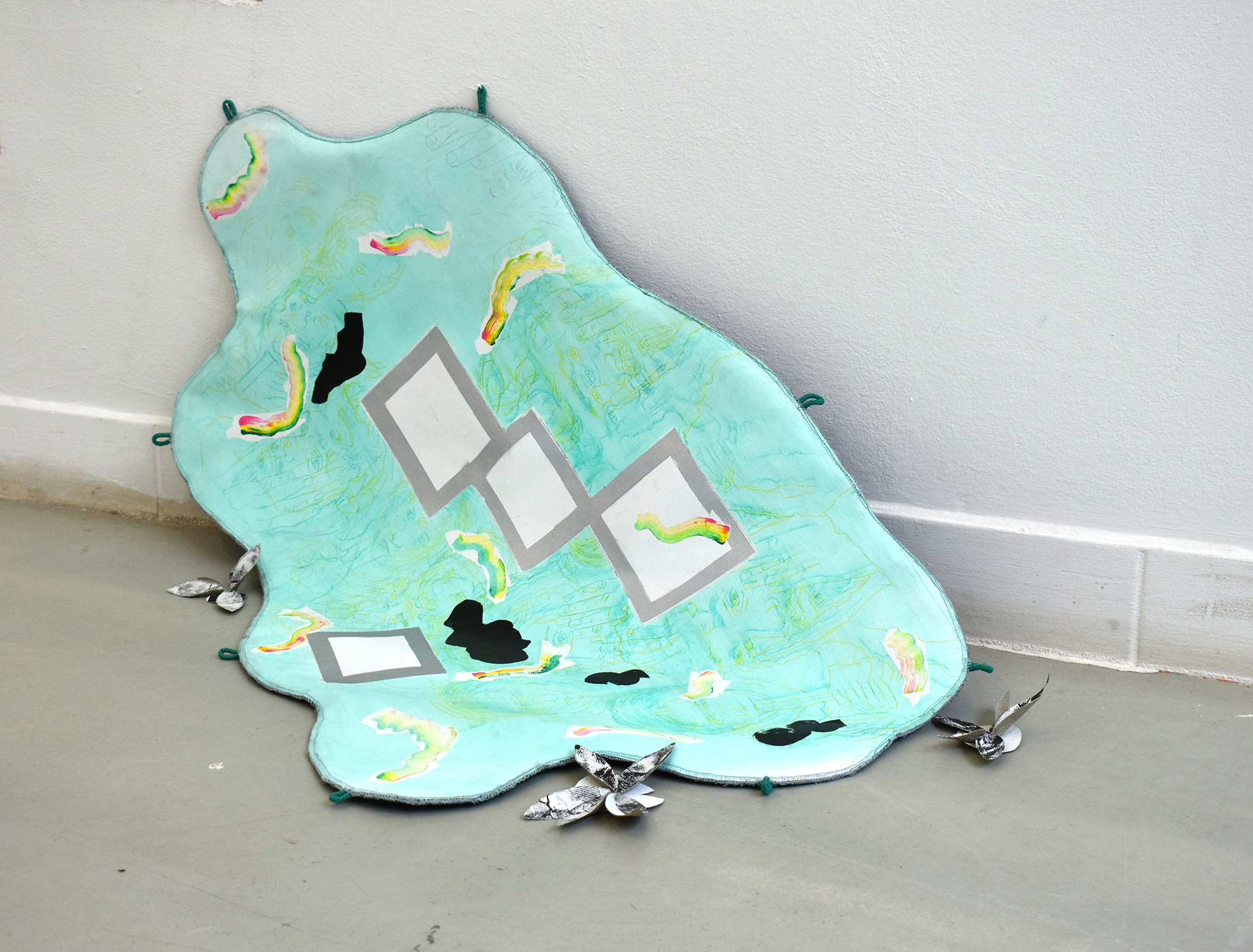
✨ SZABÓ Ferenc [@szabrenc]: Never go back to 1999 III. ╱ mixed media / vegyes technika ╱ 44×66 cm ╱ Ph/fotó: Bajáky Boglárka
✨ SZABÓ Ferenc [@szabrenc]: Levél 1. [Leaf 1] ╱ oil, acrylic / olaj, akril ╱ 40×60 cm ╱ Ph/fotó: Bajáky Boglárka
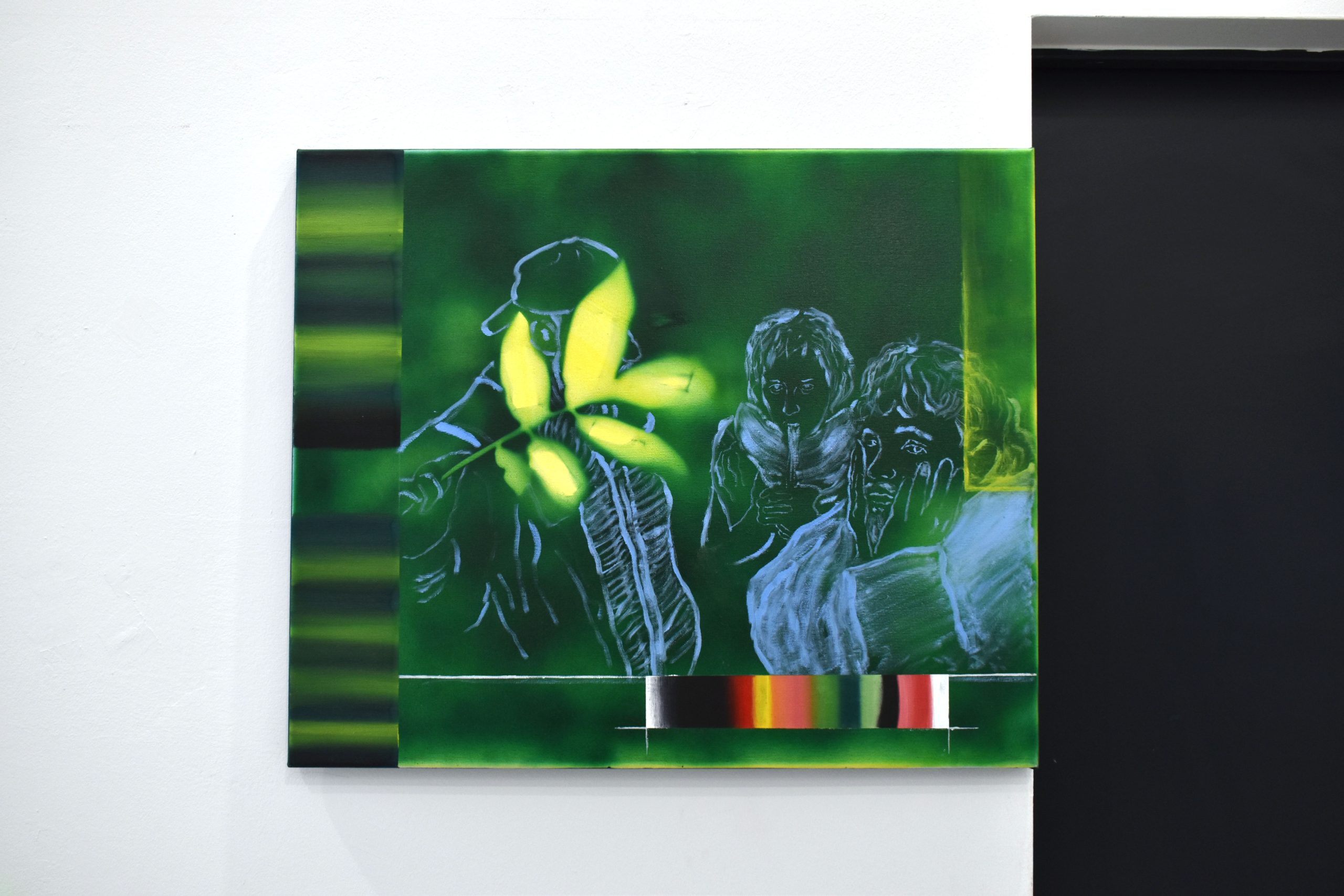
✨ SZABÓ Ferenc [@szabrenc]: Levél 2. [Leaf 2] ╱ oil, acrylic / olaj, akril ╱ 50×60 cm ╱ Ph/fotó: Bajáky Boglárka
A jelentés husángjai
Aki itt választ keres, az olyan, mint aki baltával akar vizet fakasztani a betonból. Az apória nem egy probléma, amit meg kell oldani. Az apória egy állapot. Olyan, mint amikor a szakács véletlenül saját magát darálja bele a húskrémbe: a folyamat tökéletes, az eredmény pedig ugyan tápláló, de kínos kérdéseket vet fel. Egyrészt adott a mozdulatlanság dinamikája. Ezek a vásznak nem ábrázolnak semmit, hanem visszaverik a ti értetlenkedéseteket! Másrészt előttünk a szemantikai dögkút: minden ecsetvonás egy-egy kísérlet a szökésre, de a keret olyan, mint egy diktatórikus ország államhatára: elektromos kerítés, ami visszalöki a tekintetet a centrumba.
Az entrópia esztétikája
A Z generáció elmagányosodása egy gyönyörű, technológiai daganat. Olyan, mint amikor az ember rájön, hogy a szerelme valójában csak egy jól megírt chatbot, de mégis hozzá dörgölőzik, mert a valódi bőr túl érdes, túl… emberi. Túl büdös. A csend náluk nem hiányt jelent, hanem szoftverfrissítés, ami alatt elfelejtik, hogyan kell megszólítani a másikat.
Metafizikai gyomormosás folyik, megizzasztja a művészt, a logika véres verítéke lesz. Ott bukik el Arisztotelész, ott hányja el magát a ráció. Az apória a kortárs létezés egyetlen őszinte formája. Olyan, mint egy gyönyörűen szervírozott ezüsttál, amin egy darab gondosan megformázott, fagyasztott kutyaszar pihen. Megehetjük? Meg. Kell? Talán. De a villa megáll a levegőben. Ez a pillanat az apória.
Aki érti, az már hazudik. Aki érzi, az már rabszolga. Csak az szabad, aki belefullad az ellentmondásba. Hogyan nézzük a kiállítást?
- Vedd elő a telefonodat! Ha nem posztolod, meg sem történt. Ha nem látják mások, hogy itt vagy, akkor nem is létezel. Csak egy hiba a mátrixban.
- Érezd a viszketést! Ezt az ingert, hogy megérints valakit, miközben tudod, hogy a következő pillanatban úgyis csak a képernyőt fogod simogatni.
- Szippants bele a levegőbe! Érezd a tiszta ózon és a szintetikus szorongás illatát? Ez a jövő parfümje.
- Ne elemezz! Az elemzés a gyengék mankója.
- Ne keress szépséget! A szépség csupán a rothadás máza.
- Lélegezz egyenletesen! Amíg a tüdőd tágul, az ellentmondás is tágul benned.
A kiállítás megnyílt. Vagy inkább a szerver elindult. Nincs kijárat, csak scroll down. A büfében hideg kék fényt és tablettákat szolgálunk fel, amik segítenek elviselni azt a tényt, hogy ti soha többé nem lesztek egyedül, mégis örökre magányosak maradtok.
─────
Kurátorok:
IZSÁK Eliza @elizarchivee
PRIMECZ-MUNKÁCSI Lőrinc @loryncz
További anyagok:
https://www.instagram.com/p/Db5_WpKjF1i/
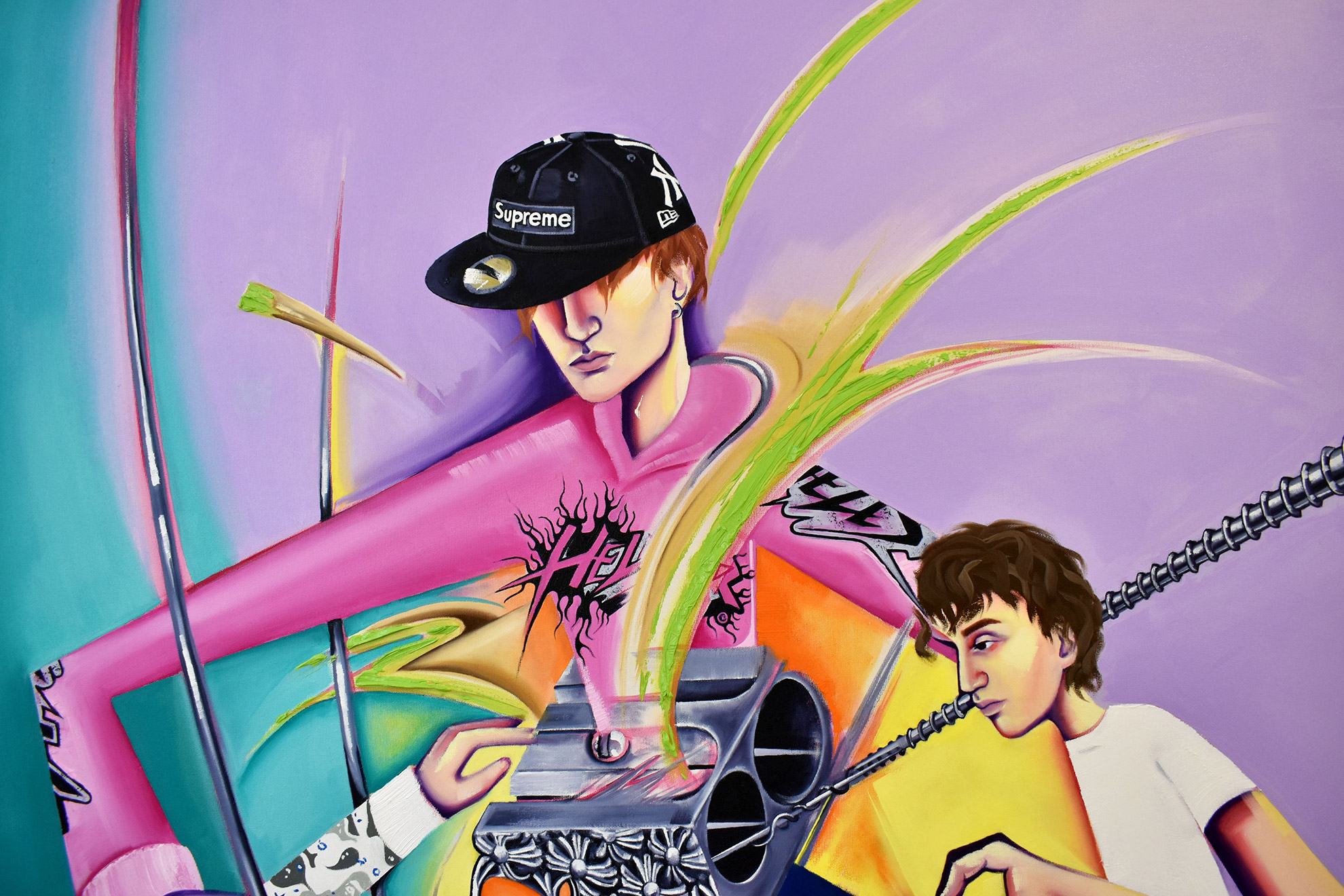
✨ SZÉKELY Virág Szirom [@vrg.szirom]: BeSZakadt [Caved In] ╱ oil on canvas / olaj, vászon ╱ 200×150 cm ╱ Ph/fotó: Bajáky Boglárka
✨ SZÉKELY Virág Szirom [@vrg.szirom]: Split Pocket ╱ oil on canvas / olaj, vászon ╱ 100×100 cm ╱ Ph/fotó: Bajáky Boglárka
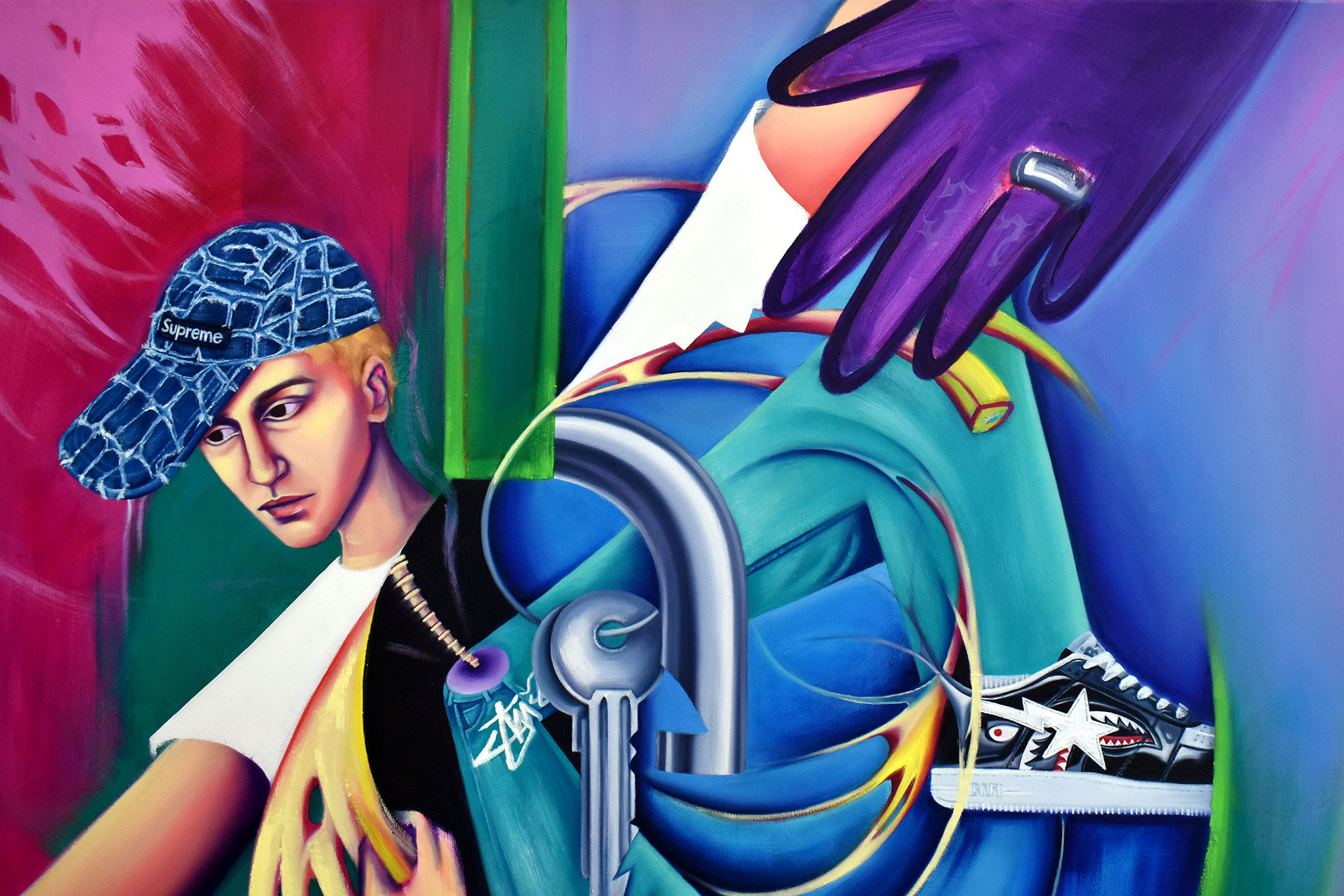
✨ SZÉKELY Virág Szirom [@vrg.szirom]: Split Pocket ╱ részlet / detail ╱ oil on canvas / olaj, vászon ╱ 100×100 cm ╱ Ph/fotó: Bajáky Boglárka
Csaba Kis Róka
Gen Z’s Courtship on the Terrace of Trends
On the exhibition by Léna Erdélyi, Ferenc Szabó and Virág Szirom Székely
Textilgyár, May 7–18, 2026
Distinguished biological entities, cell clusters, and digital shadows! Welcome to this sterile vacuum that we – the last trembling cells of Late Capitalism – still insist on calling an exhibition space. Today we are not going to be looking at pictures. Today we are taking part in the dissection of Generation Z’s collective, fibreglass-reinforced loneliness – without anaesthesia. My name is Csaba Kis Róka: a glitch has found its way into your system, and I am here to rip open the flesh rotting behind your touchscreens by means of a series of modestly titled episodes.
The Chemistry of Loneliness
They are no longer human. They are gelatinous data-beings, crammed into the narrow incubators of algorithms. Their loneliness is not that of the wolf on the steppe, nor that of the Romantic poet. Their loneliness is like a slab of vacuum-packed spam forgotten in a refrigerated warehouse: glossy on the outside, a greyish, unrecognizable mass within. Their allergic reactions are the only proof that they still exist biologically.
They are inmates of the dopamine-GULAG. Every like is another gram of virtual sugar shoved through the bars. But the bars remain. The walls are not made of stone but of blue light. They languish in a state of digital rigor mortis. Their thumbs have already become autonomous life-forms, scrolling through nothingness as parasitic organisms, while their hearts slowly shut down from the lack of real touch.
Generation Z is the first to realize that the body is merely obsolete hardware, an uncomfortable meat-server onto which the colourful textures of branding must be stretched, just as canvas is stretched over the wooden bar. For them, fashion is not self-expression. How could it be, when the “I” is nothing more than a dimly lit cluster of pixels in the back alley of the metaverse? Fashion is no longer style. It is armour against reality. The more layers you put on, the more convincingly you believe that you exist.
What is actually visible here? On the one hand, the irony of nostalgia: why are young people today wearing the rags of the 1990s? Because the marketing dementors directing their minds have realized that the past is the only place where the illusion has not yet collapsed. On the other hand, logomania: every label is a mantra. The Nike swoosh is not a logo but a ritual seal, protecting its wearer from ever having to face the silence inside.
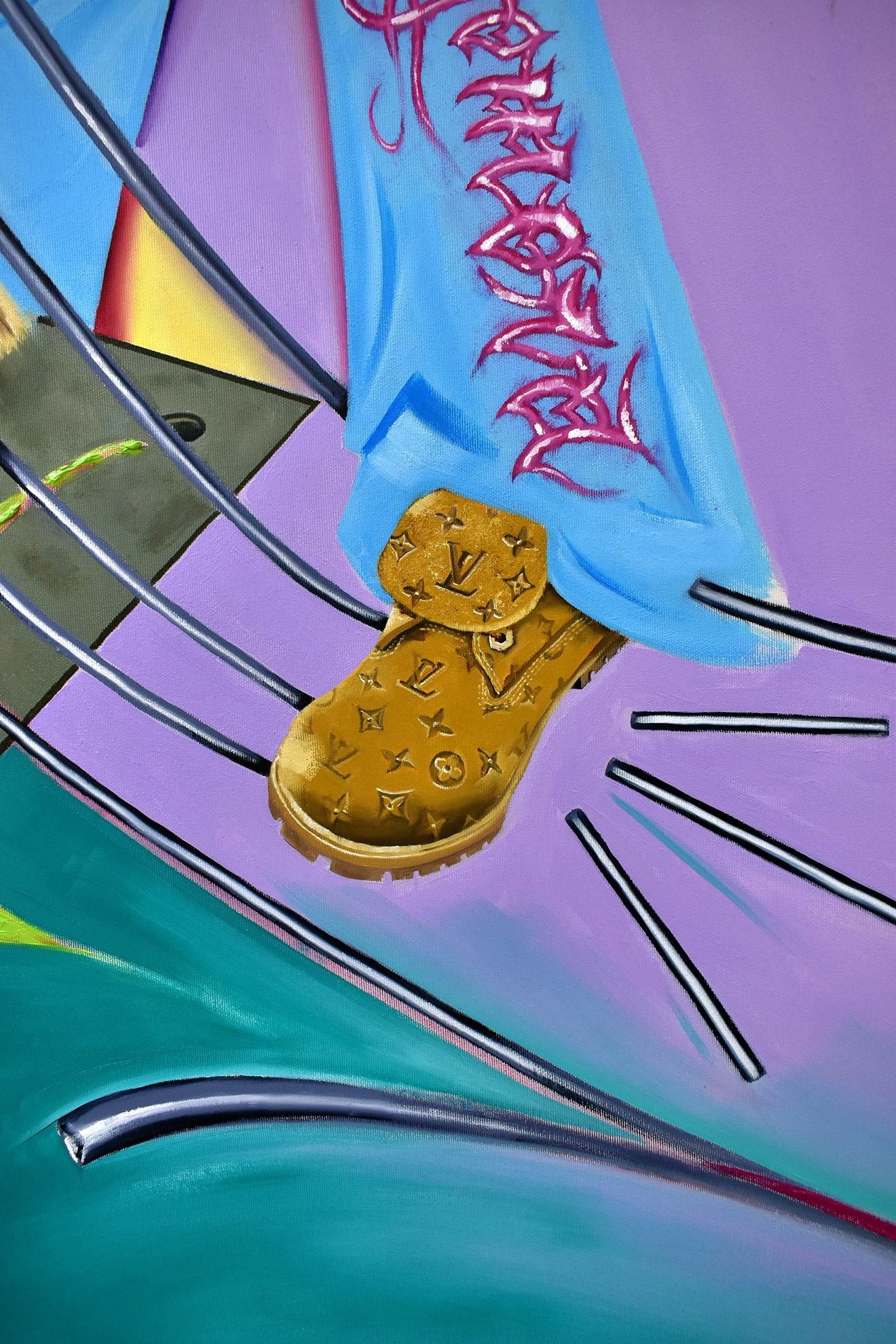
✨ SZÉKELY Virág Szirom [@vrg.szirom]: BeSZakadt [Caved In] ╱ részlet / detail ╱ oil on canvas / olaj, vászon ╱ 200×150 cm ╱ Ph/fotó: Bajáky Boglárka
The Bludgeons of Meaning
Anyone looking for answers here is like someone trying to hack water out of concrete with an axe. Aporia is not a problem to be solved. Aporia is a state of being. It is like when a chef accidentally grinds himself into the meat paste: the process is flawless, and the result is certainly nutritious, but it does raise a few embarrassing questions. On the one hand, there are the dynamics of immobility. These canvases do not depict anything; they merely reflect your bewilderment back at you. On the other hand, before us yawns a semantic carcass pit: every brushstroke is an attempt to escape, but the frame is like the border of a dictatorship – an electric fence that throws the gaze back into the centre.
The Aesthetics of Entropy
Generation Z’s loneliness is a beautiful technological tumour. It is like realizing that the one you love is actually nothing more than a well-written chatbot, and yet still rubbing yourself against it because real skin is too coarse, too… human. Too smelly. For them, silence is not absence but a software update during which they forget how to address another person.
A metaphysical stomach pumping is underway. It makes the artist sweat; it becomes logic’s bloody sweat. This is where Aristotle comes undone. This is where reason vomits. Aporia is the only honest form of contemporary existence. It is like a beautifully presented silver platter bearing a meticulously sculpted piece of frozen dog shit. Can we eat it? We can. Should we? Perhaps. But the fork freezes halfway to your mouth. That moment is aporia. Whoever understands is already lying.
Whoever feels it is already a slave. Only the one who drowns in contradiction is free. So, how Should we view the exhibition?
- Take out your phone! If you don’t post it, it never happened. If nobody sees that you are here, then you do not exist. You are merely a glitch in the matrix.
- Feel that itch! That impulse to touch another human being, while knowing that in the very next moment you will be stroking a screen instead.
- Take a sniff of fresh air! Can you smell the clean ozone and synthetic anxiety? This is the perfume of the future.
- Do not analyse! Analysis is a crutch for the weak.
- Do not seek beauty! Beauty is merely the glaze of decay.
- Breathe steadily! As your lungs expand, so does the contradiction inside you.
The exhibition has opened. Or rather, the server has booted up. There is no exit, only scroll down. At the buffet we serve cold blue light and pills to help you endure the fact that you will never again be alone, and yet will remain forever alone.
─────
Curated by
Eliza IZSÁK @elizarchivee
Lőrinc PRIMECZ-MUNKÁCSI @loryncz
For more, see,
https://www.instagram.com/p/Db5_WpKjF1i/
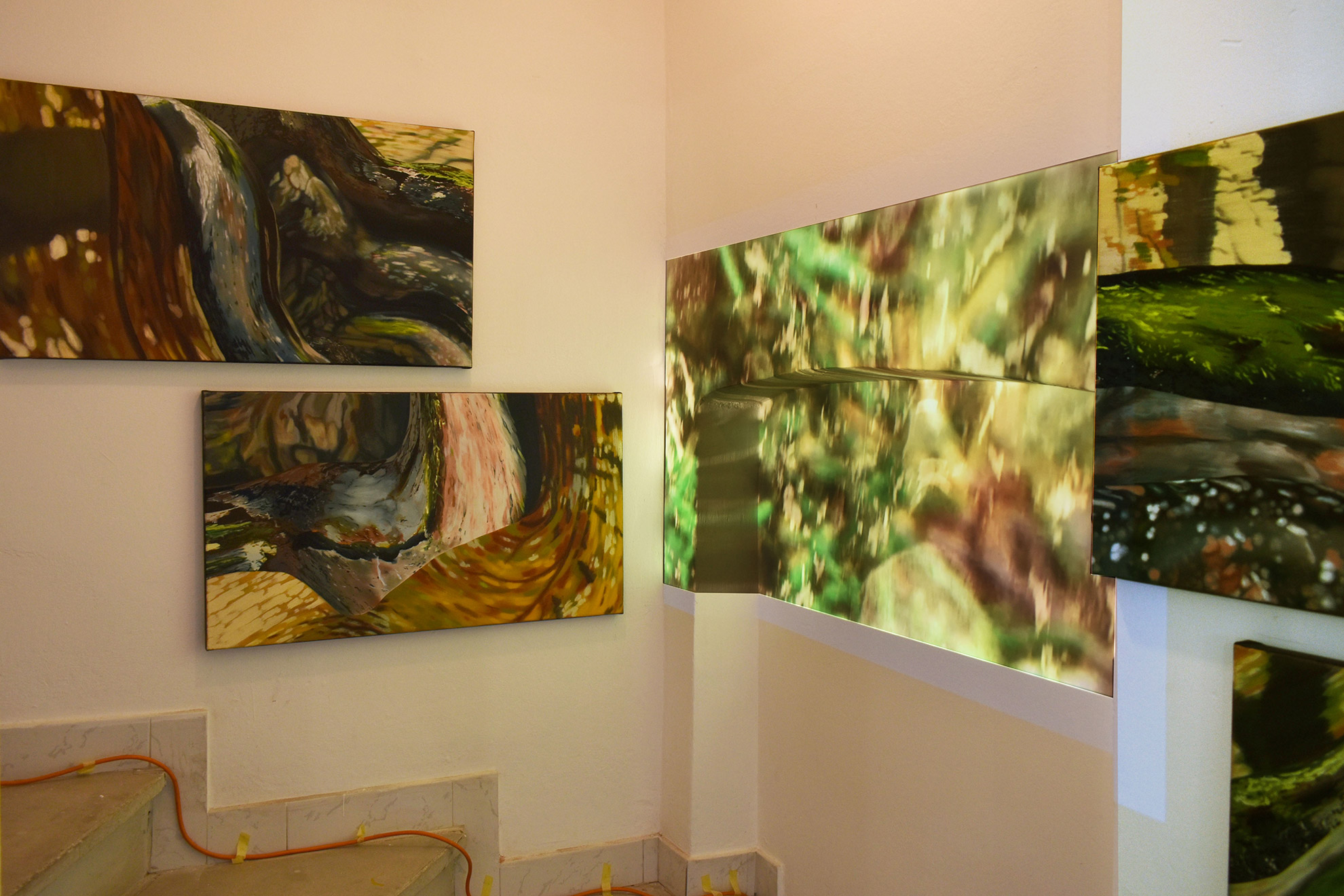
✨ ERDÉLYI Léna [@lena_erdelyi]: Forest_2 & 3 ╱ oil on canvas / olaj, vászon ╱ 45×80 cm ╱ Ph/fotó: Bajáky Boglárka +✨ ERDÉLYI Léna [@lena_erdelyi]: The trees don’t care whether you can run away from the pigs ╱ video / videó ╱ 1’08” ╱ Ph/fotó: Bajáky Boglárka
✨ ERDÉLYI Léna [@lena_erdelyi]: Embryo_7 ╱ 3D print, acrylic / 3D print, akril ╱ 15×8,5×17,5 cm ╱ Ph/fotó: Bajáky Boglárka
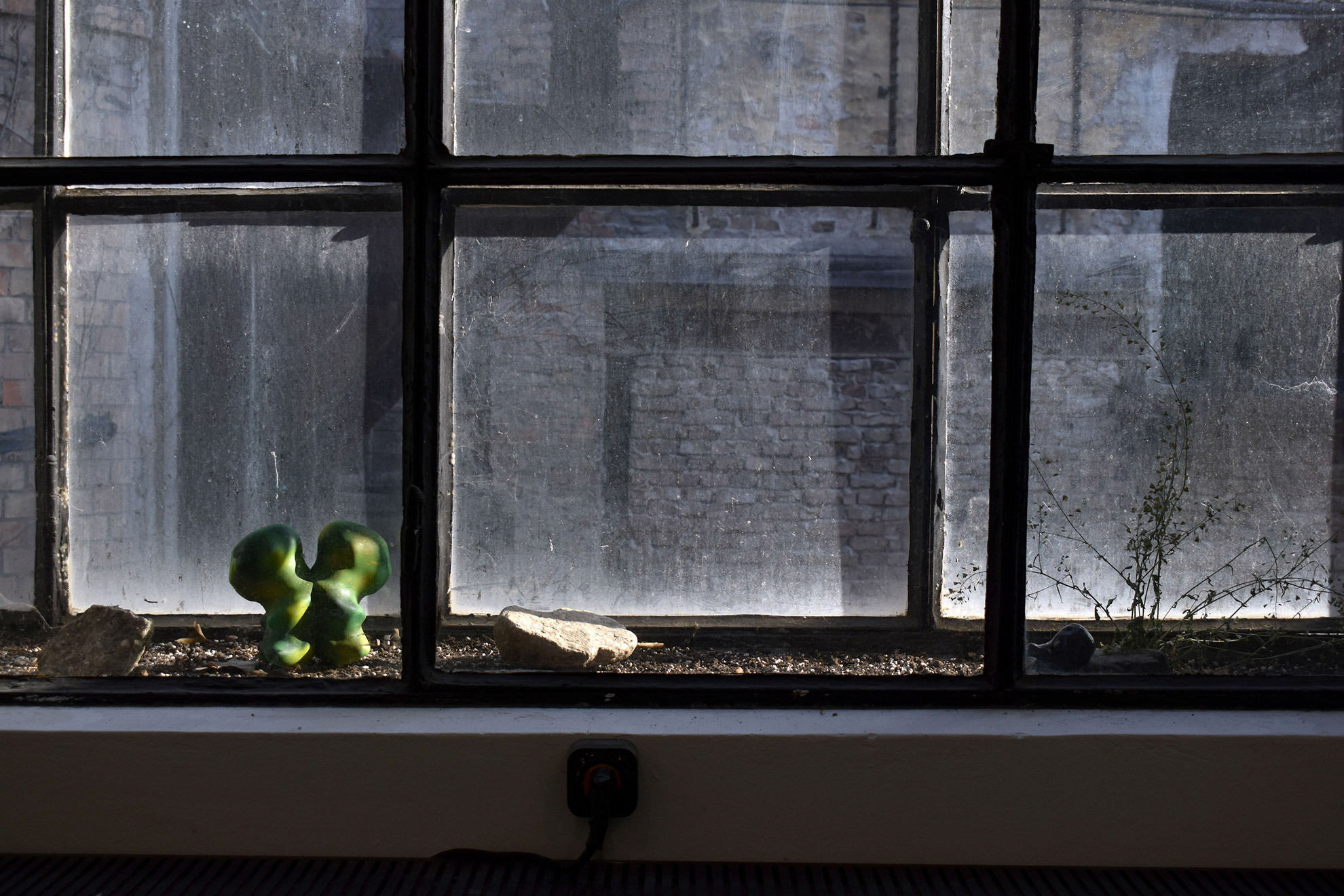
✨ ERDÉLYI Léna [@lena_erdelyi]: Installáció [Installation] (Embryo_2 és Embryo_7) ╱ 3D print, acrylic / 3D print, akril ╱ 10×5×6 cm és 15×8,5×17,5 cm ╱ Ph/fotó: Bajáky Boglárka
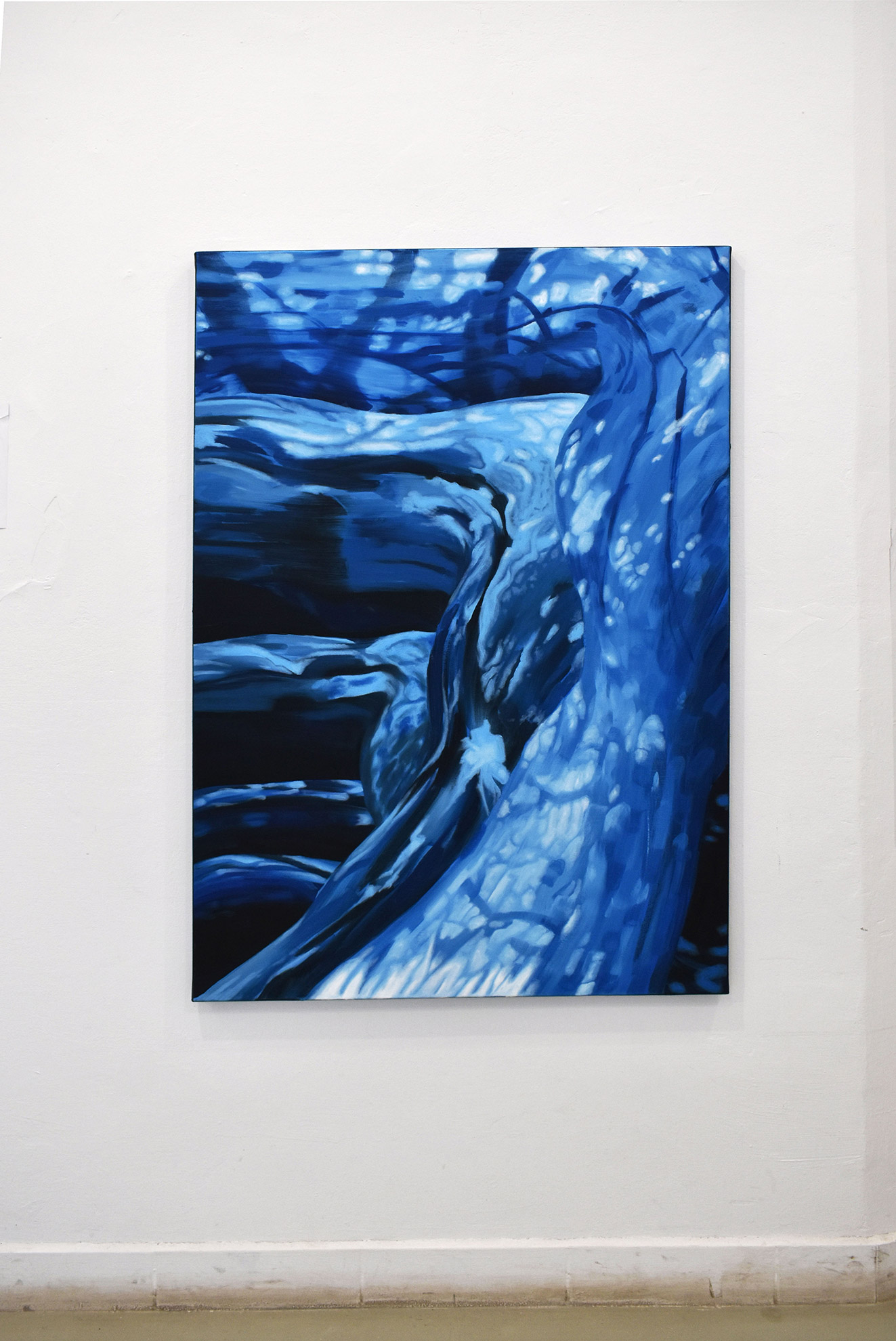
✨ ERDÉLYI Léna [@lena_erdelyi]: Forest ╱ oil on canvas / olaj, vászon ╱ 120×80 cm ╱ Ph/fotó: Bajáky Boglárka